Water sort, screws, tangled cables: which puzzle type fits you?
A puzzle game gives you a problem with a fixed answer and waits for you to find it. The problems themselves vary a lot. A water sort game trains you to plan a sequence, a cable game asks you to read layers, and a drawing puzzle asks you to predict physics. This guide splits the games in the Oyun Köşesi puzzle category into six groups by mechanic. For each group you get how it plays, who tends to enjoy it and what to try when a level will not budge. At the end there is a short pick list sorted by mood.
What makes a puzzle game different?
In a puzzle you lose because your plan was wrong, not because your fingers were slow. Arcade games test reflexes and runners test timing. A puzzle usually shows you everything up front and asks you to use that information in the right order. Most have no clock, and a mistake restarts the level rather than ending your run.
One distinction trips people up. Games where you line up three of a colour and pop them live on a separate shelf, the Match & Block category. There the board keeps refilling and luck plays a bigger part. The puzzles in this guide use fixed layouts: reopen a level and you face exactly the same problem with exactly the same solution. Every failed attempt teaches you something.
Puzzle types by mechanic
Titles vary wildly, yet underneath they reuse a handful of patterns. Once you know which pattern you like, you can guess whether a new game will click before you even load it.
Sorting puzzles: water and screws
Sorting puzzles hand you a mixed-up set of items and a rule for moving them into the right containers. Sort Color Water Puzzle is the cleanest example: click a tube, then click the tube you want to pour into. Water only moves if the top colour matches or the target is empty, and every tube has a limited capacity. Pour in the wrong order and the colours lock up, so you restart the level.
Color Screw Rescue Puzzle wraps the same idea in metal plates. Tap a screw and it flies into the box of its colour, but the boxes are small. If they fill up and no suitable screw is left to remove, the level is lost. The lesson both games share: empty space is your most valuable resource, and the player who spends it early gets stuck.
Untangling puzzles: cables and rings
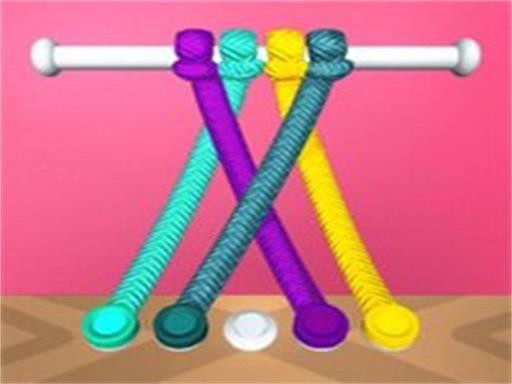
Here a knot or a lock holds everything together, and you free the pieces in the correct order. Tangle Master 3D puts a heap of cables on a desk and has you drag the plugs until the lines run straight. The more cables a level has, the more stubborn the knot becomes. Start with the wrong plug and you can put it back and try another cable.
Circularmatrix asks you to rotate interlocked rings until each gap lines up and the ring slips free. It is the only game in this group with a timer: when it runs out, the same layout comes back. There is usually one correct order, and an outer ring has to go before the inner ones can move. Across this family, the piece with nothing on top of it is always your first move.
Drawing and physics puzzles
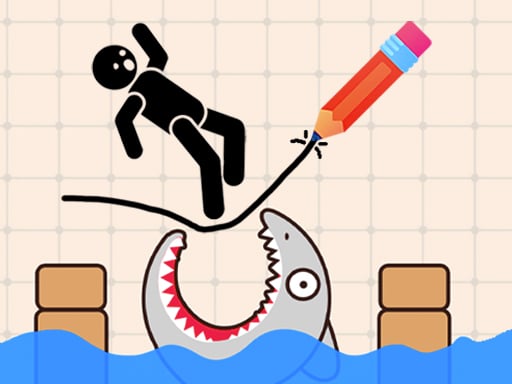
You do not pick an answer here, you draw it. In Draw and Save Stickman every line you draw with the mouse held down turns into a solid shield that keeps a falling rock or a flying arrow away from the stickman. The danger arrives shortly after the level starts, so you need to read the scene fast, and the amount you can draw is limited.
Water Bucket applies the same drawing idea to running water. Your lines become ramps the water flows along, and the goal is to fill the bucket to a set level. Extra lines cost you stars, and later levels make you bounce the stream off a platform. This is the one puzzle family where two different drawings can both solve the same level.
Merge puzzles: numbers and colours
Merge puzzles have you combine matching pieces into bigger ones. Get 10 Ultimate fills a grid with numbers; click a group of equal neighbours and they fuse into the next number up. When no neighbours can merge, the game is over. If you have played 2048 the idea will feel familiar, except you click instead of swiping.
Jelly Mix Up is the swiping side of the family. Push the board in any of four directions and every jelly slides that way, with touching jellies of the same colour joining up. New jellies appear after every move, so you have to stop the board from filling. Here the board grows and shrinks move by move, and the real skill is parking your biggest clusters in one corner.
Placement and balance puzzles
In this group, putting a piece in the right spot is everything. PixelBlock gives you shapes to drag onto a grid so you can complete full rows and columns. Pieces cannot be rotated, and the game ends when none of the pieces in your hand fits anywhere. There is no time pressure.
Weight Puzzle Game adds physics to placement. You drop objects onto the pans and try to bring the whole contraption into perfect balance, and an object's size does not always tell you its weight. The good news is that you can pick a piece back up and place it again, which makes this one of the friendliest games here for learning by trial and error.
Route planning puzzles
In a route puzzle you guide a character to a goal, and the real work happens in your head before the first step. Freight slides your character in the chosen direction until it hits an obstacle. One wrong direction can trap you in a dead-end corner, and most of the time there is no undo.
Zappy mixes route planning with timing. You walk a small robot through traps while carrying a mystery box to the exit, and sometimes the box has to act as a weight on a platform. It is the only game on this list that needs a computer, because movement and the box action are mapped to keys.
Controls: mouse, touch and keyboard
Most puzzle games need a single finger. Eleven of the twelve games in this guide also work on a phone, using a tap, a drag or a drawn line. In short:
- Click to select: water sort, screws, Get 10 and Freight. Left click on a computer, tap on a phone.
- Hold and drag: Tangle Master 3D, PixelBlock, the weight puzzle and Circularmatrix.
- Hold and draw: the stickman shield and Water Bucket. No drawing talent needed; a plain straight line usually does the job.
- Swipe: Jelly Mix Up uses the arrow keys on a computer and four-way swipes on a phone.
- Keyboard: in Zappy you walk with WASD or the arrow keys and press Space or E to pick up and drop the box.
If some key names look unfamiliar, the game controls glossary explains them. The screw and ring games were designed for a portrait screen, so hold your phone upright for those two.
Which puzzle type suits you?
Start from what you already enjoy. If you are the person who colour-codes a bookshelf, sorting puzzles will feel natural: simple rule, clear payoff. If untangling last year's Christmas lights is oddly satisfying, go for untangling puzzles. If you like picturing how something will fall or flow, try the drawing and physics games.
Players who are comfortable with numbers and like one long session on a single board should look at merge puzzles. If you grew up on Tetris but hate a ticking clock, placement puzzles are your shelf. And if you enjoy thinking a few moves ahead, as in chess, route planning will feel like home. Playing alongside a child? Water sort and PixelBlock are good openers, since neither has time pressure and each rule fits in one sentence. For more maths and memory games, the Brain & Learning category sits right next door.
Stuck on a level? Try this
Four habits work across every type. The first is to look back before you restart. Find the exact spot where things locked: where the water spilled, which colour went into the wrong tube, which cable jammed. The real mistake is usually three or four moves earlier than the one that ended the level.
The second is to work backwards. In a route puzzle, ask which square the final step must come from. In water sort, decide which tube will be filled last. That single question cuts a hundred possible moves down to two or three.
The third is to find the free piece. With cables, rings and screws, the solution always starts with whatever has nothing on top of it.
The fourth is to protect your spare room. An empty tube, a free slot in a screw box, an open column on the edge of the grid and your limited ink are all the same thing under different names: space to manoeuvre. On the level that beat you, check when you spent it. Still nothing? Play another type for a few minutes and come back.
A starter path for beginners
If puzzles are new to you, raise the difficulty gradually. This order is based on how quickly each game's controls and rule sink in:
- Step one: water sort and Get 10. One-sentence rules, and a single click is all you need.
- Step two: PixelBlock and Jelly Mix Up. You start arranging the board with a few moves in mind.
- Step three: screws, the weight puzzle and Draw and Save Stickman. Hidden rules such as layers, weight and physics come into play.
- Step four: Tangle Master 3D, Water Bucket and Freight. These call for longer plans and thinking backwards.
- Step five: Circularmatrix and Zappy. Planning plus a timer or tight timing on top.
Want to go deeper on grid placement? We broke down block puzzle strategy step by step in a separate guide.
Best puzzle games to play online, by mood
Every game below is single player and opens in your browser.
For a quiet evening, pick one of the two sorting games with no clock running. One moves coloured water between tubes, the other sends screws into boxes, and both let you restart a level whenever you like.


If undoing knots is your thing, try this pair. The cable game wants patience; the ring game wants patience and a little speed.

Two drawing-based physics puzzles that reward creative answers. Half the fun is beating the same level with a completely different sketch.

For one long session on a single board, the merge games. The number game is played by clicking, the jelly game by swiping.


For the simple joy of a piece landing in the right place: a block grid with no time pressure, and a scale you have to balance by eye.


For players who like counting moves in advance, two route puzzles. Zappy needs a keyboard, so open it on a computer.


Related guides
To see how puzzles compare with every other genre on the site, read game genres explained. If you play on a phone and run into screen, sound or touch problems, browser games on phone and tablet covers the usual fixes.
Frequently asked questions
Do puzzle games have a time limit?
Most do not. In this guide, Circularmatrix is the one with a countdown. In Draw and Save Stickman the danger arrives soon after the level starts, so you need to draw quickly, and in Zappy you have to match the rhythm of the traps. Water sort and PixelBlock put no pressure on you at all.
Do I lose my progress when I get stuck?
Not in level-based games. In water sort, Tangle Master 3D, the stickman game, Circularmatrix and Zappy, a mistake only restarts the current level. In the weight puzzle you can simply lift an object and put it somewhere else. Get 10 and PixelBlock are played on one continuous board instead; when you run out of moves, that board ends and you start a fresh one.
Which puzzle games work on a phone?
Eleven of the twelve games on this list work on a touchscreen. The exception is Zappy, which expects keyboard keys and should be played on a computer.
Which puzzle type is best for kids?
The ones whose rule fits in a single sentence: water sort, Get 10 and the weight puzzle. The water sort page itself describes it as a calm, non-violent logic game that younger players can enjoy. If your child gets stuck early on, sit next to them and try the work-backwards trick from above together.