Match and Block Games Guide: Every Type, How Scoring Works, What to Play
A matching game is any puzzle where you bring identical pieces together so they either vanish from the board or fuse into something bigger. The family splits into four main branches: match-3, where you swap tiles to line up three of a kind; triple tile games, where you collect three identical tiles in a tray; merge games, where equal numbers or objects combine into the next level; and block puzzles, where you fill rows on a grid. They share one rule of thumb: a full board loses, a good match buys space. What separates them is the move you make and where the score comes from. Below, each branch in turn, then a game to start with.
The matching family: four branches and a few offshoots
Every game in the matching category on Oyun Köşesi fits somewhere below. Judge a game by its move, not its art.
Match-3: swap two neighbours
You swap two adjacent tiles, and if three or more of one colour end up in a line, they clear. New tiles drop in from above, and when that fall happens to form another line on its own, you get a free cascade. Most match-3 titles are level based: collect a set number of one colour within a fixed number of moves. Candy Shuffle Match-3 follows that pattern closely and tells you the target candy at the start of every level.
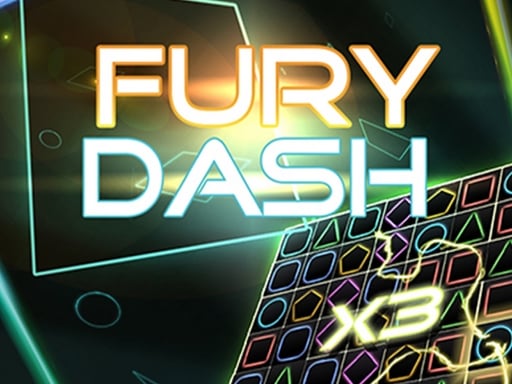
A close relative is the tap-to-blast game. There is no swapping; the board already sits in clusters of one colour, and tapping three or more touching pieces pops the group. Fury Dash is a clean example of this offshoot, and here speed matters, because quick back-to-back blasts fill a fury meter.
Triple tile: collect into a tray
Tiles are stacked in layers and only the uncovered ones can be picked. Each tile you pick drops into a tray at the bottom of the screen, and three identical tiles in the tray disappear together. Fill the tray with no triple left to finish and the level is over. This branch has more in common with mahjong solitaire than with match-3, because you need to keep count in your head. Bird Tile Trio plays exactly like this. If you want the pair-based ancestor, our mahjong solitaire rules explain the two-tile version.
Pair finding: spot the twin
No lines here. You pick an object, then hunt for its exact twin. The challenge is visual rather than logical: objects are piled on top of each other and some are turned the other way. Match 3D spills three-dimensional items across a table and runs each level against a timer. Because pairs are judged by shape as well as colour, players who struggle to tell colours apart can still get along with it.
Merge: two equals make one bigger
In merge games matching pieces do not disappear; they level up. A 2 and a 2 become a 4, two small boats become one larger ship. Since nothing clears, where you park your biggest piece decides the game. Three different flavours live in this branch:
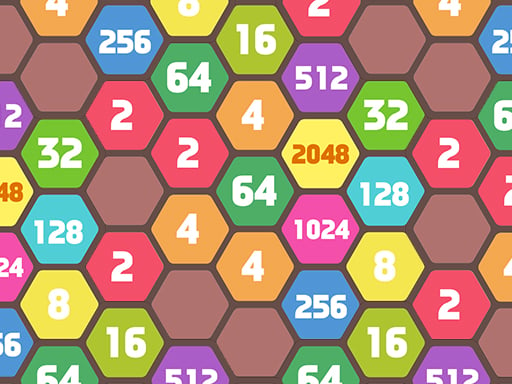
- Slide-to-merge numbers: you swipe the board and every tile moves at once. 2048 Hexa Merge Block does this on a honeycomb grid with six directions instead of four.
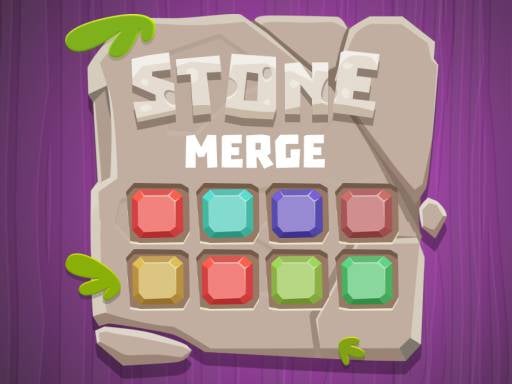
- Drag-to-merge numbers: you pick up one stone at a time and drop it on its match, using empty cells as a parking spot. That is how Stone Merge works.
- Idle-style merging: whatever you merge earns you money, and money buys the next piece. Merge Ships grows a harbour of small boats into a trading fleet.
Block puzzles: complete the line
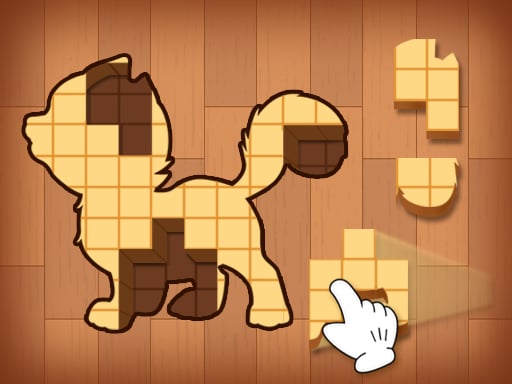
Pieces appear under the board and you drag them onto the grid. When a row or column is full from end to end, it clears. What you are matching is not a colour but a shape: the piece in your hand against the gap on the board. Woody Block Puzzles hands you three pieces at a time with no clock running, which makes it the calmest example of the branch. For placement order in detail, read our block puzzle strategy piece.
Offshoots: aim-to-match and connection puzzles
In bubble shooters you build the match with a shot. The bubble you fire touches two of the same colour, the group of three pops, and anything no longer hanging from the ceiling drops with it. You will find the whole group on our bubble shooter games page. Connection puzzles ask you to rotate pieces until a line runs unbroken; the thing you are matching there is the open end of a pipe.
How scoring works
Points nearly always come from the same three places.
- Line length: a three is the smallest reward. Fours and fives score more and also create special pieces. On games with a leaderboard, refusing to settle for threes is where the gap opens.
- Cascades: matches that form by themselves after your move, as tiles fall into place. The easiest way to get more of them is to move near the bottom, since clearing low shifts every column above it.
- Tempo: some games reward speed directly. In tap-to-blast games, fast chains fill a meter that unlocks a short burst of extra power.
Merge and block games tilt the maths a little. In 2048-style games your score grows with the value of the tile you create, so one big merge beats a handful of small ones. In block puzzles, clearing several lines with one piece pays more than clearing them one at a time. Either way, the real source of points is how long you keep the board breathing, because a locked board ends the run.
Boosters and special pieces
Match-3 games offer two kinds of help, and it pays to keep them apart. The first kind are special pieces born on the board: match four and you get one that sweeps a row, match five and you get something that clears a wider area. Those come from your own moves and cost nothing. The second kind are the booster icons at the edge of the screen, which you click during a level and which usually come in limited numbers.
The most useful habit with special pieces: do not fire them alone, pair them. In Alchemist Lab - Jewel Crush, swapping two bonus stones that sit next to each other can wipe most of the board in one move. Keep booster icons for levels where you are far from the target and running low on moves.
Merge and block games replace boosters with space management. Your wild card is the empty cell: keeping one slot open on the dock, the grid or the board is worth as much as a bomb in match-3.
Controls: mouse or touch
One big plus of this genre is that it plays with one hand. None of the twelve games below needs a keyboard; a mouse or a finger covers everything.
- Drag and drop: in match-3 you pull a tile towards its neighbour; in block and merge games you carry a piece wherever you want it.
- Single click or tap: triple tile, pair finding, tap-to-blast and pipe rotation all run on one click.
- Aim and release: in a bubble shooter you steer the aiming line with the mouse and left click; on a phone you touch and let go.
All twelve games in this guide run on phones too. If you want the practical side of playing in a mobile browser, from rotation to full screen, see browser games on phone and tablet.
Which type suits you
Pick by what you want to be challenged on, not by the artwork. Four questions settle it:
- Do you want a clock? If not, block puzzles and slide-to-merge stay relaxed. If you do, tap-to-blast and timed pair finding push your pace.
- Short levels or one long run? Level-based match-3 and triple tile give you goals of a few minutes. 2048 and block puzzles are single long games that last until the board locks.
- Planning or eyesight? Triple tile and 2048 reward thinking a few moves ahead. Pair finding and bubble shooters lean on attention and hand-eye coordination.
- Do you like a sense of progress? In idle-style merging, the fleet keeps growing and you feel like you are building something.
Playing with a child? One-click types with a gentle fail state, like pair finding and bubble shooters, need the least explaining.
A beginner roadmap
New to the genre? Try this order.
- Step 1, eyes: start with a pair-finding game. The rule barely exists; you are just learning to spot the same thing twice.
- Step 2, lines: open a classic match-3 and make every early move near the bottom. You will see cascades form in front of you.
- Step 3, space: move on to a block puzzle. This is where keeping the board open first becomes your problem.
- Step 4, planning: triple tile and 2048-style merging. Neither can be won without thinking two or three moves ahead.
Going back a step is fine; the edge discipline you learn in 2048 carries over to block puzzles.
Best matching games to start with
Every branch above gets at least one game here. All are single player.
Candy Shuffle Match-3 teaches classic match-3 in its tidiest form. The target candy is shown when the level starts, moves are limited, and booster icons are there when a board fights back.

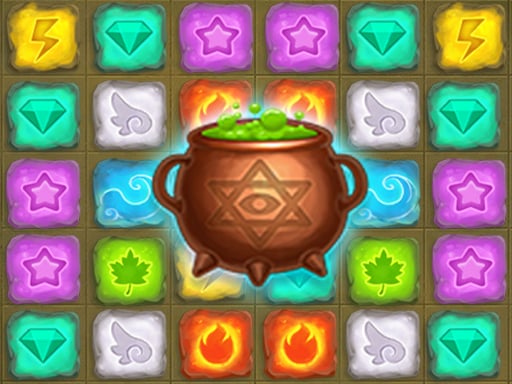
Alchemist Lab - Jewel Crush is a good lab for testing special-piece combos. Bonuses from rows of four and five can be pushed together and set off, and the move count tightens as the levels go on.
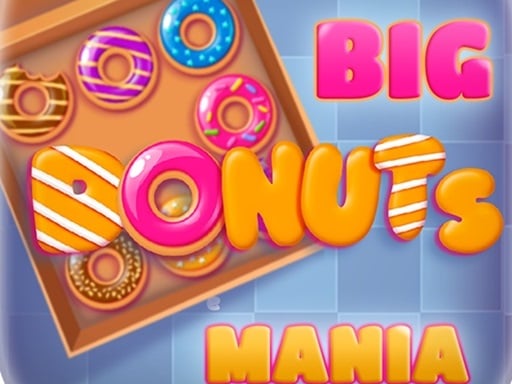
Big Donuts Mania is for players who would rather chase a score than a level goal. Rows of four and five push the points up noticeably, and the result shows on the score table.
Fury Dash skips swapping entirely; a tap on a cluster is enough. It has two modes: a time trial where you score as much as you can in a fixed window, and a survival mode with a target that keeps climbing.
Bird Tile Trio is the gentlest way to learn tray logic. Holding no more than two unfinished pairs in the tray at once is the first discipline it will teach you.

Match 3D is a calm attention game where you find the twins of objects dumped on a table before time runs out.

2048 Hexa Merge Block catches out even seasoned 2048 players. With six directions, the familiar corner strategy turns into an edge strategy. You play until the board locks.
Stone Merge is the drag-and-drop sibling of 2048. You move each stone by hand instead of sliding the whole board, so when something goes wrong you can see exactly why.
Merge Ships ties merging to a small economy. Ships at sea bring in money, and you climb the chain by always leaving one free slot on the dock.

Woody Block Puzzles is for thinking without a timer. The three pieces cannot be rotated, so you need to see where all three will go before you place the first.
Bubble Shooter Classic is the version with rules nobody changed. Bouncing the aiming line off the wall to check the angle drops far more bubbles than guessing. More shooting tactics are in our bubble shooter tips.

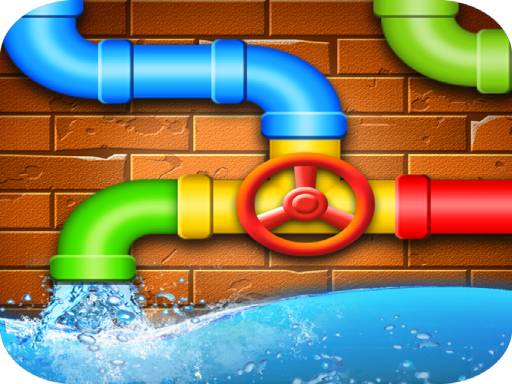
Connecting Pipes 3D is the most distant cousin in the family. You click pieces to turn them and get water to the flowers; starting from the source makes the route much easier to read.
Where to begin? Brand new to the genre: Candy Shuffle Match-3. Want something quiet: Woody Block Puzzles. Want to think hard: 2048 Hexa Merge Block.
Related reading
- Block puzzle strategy: keeping the grid open, step by step.
- Bubble shooter tips: bank shots and dropping whole clusters.
- Mahjong solitaire rules: how pair-based tile matching works, with games on our mahjong games page.
- Game genres explained: where matching sits among the other genres.
Frequently asked questions
Is match-3 the same as triple tile matching?
No. In match-3 you swap tiles to form a line on the board. In triple tile games you take tiles off the board and gather them in a tray, where three of a kind disappear.
Does 2048 count as a matching game?
Yes, it is the best-known merge game. Two equal tiles meet and become one larger tile. Since tiles grow instead of clearing, the board slowly fills up by itself.
I ran out of moves. How do I get past the level?
When the moves run out, you replay the level. Next time, read the goal before your first move and ignore colours that do not count toward it; matches that do not serve the goal are the most common way to waste a level.
Do I need an account to play?
No. The matching games on Oyun Köşesi open in the browser with no download and no sign-up.