The four kinds of skill games online, and where to start with each
Skill games are games you win with your hands and eyes rather than with knowledge. You usually understand the goal in a second; the challenge is doing it at exactly the right moment, again and again. This guide sorts them into four groups: timing, balance, aim and reflex. Each group trains something different, so knowing which one suits you saves a lot of frustration. For every group we name the first game to try. All twelve games below are free on Oyun Köşesi and all of them have touch controls, so they work on a phone too.
What makes a skill game different from a puzzle?
A puzzle has a right answer, and once you find it you are done. A skill game shows you the answer straight away and then asks you to pull it off. Anyone who has tried the bottle flip trend knows the feeling: the goal is obvious, landing it is not. That is why rounds are short, mistakes are instantly visible and a restart is one tap away.
On the site, the Skill category keeps these games together. A few of them lean toward puzzles, like working out weights or fitting blocks into a grid. What they share is that the result depends on how consistent your hand is, not on luck.
The four types, with a first game for each
Timing: one right moment
In timing games the control is usually a single action. The whole question is when you do it. Press too early and you fall short, too late and you miss. These games run on rhythm: once you can repeat the same motion at the same tempo, your score climbs almost on its own.
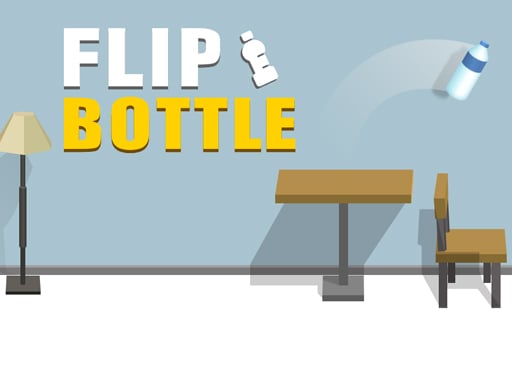
Start with Flip Bottle. How long you hold down sets the throw power; the moment you let go, the bottle spins through the air toward the next platform. Too little power and it drops short, too much and it tumbles onto its side. Every clean landing moves the next platform a little further away, so the game quietly gets harder while you are not looking. One finger is all it takes, which makes it just as comfortable on a phone.
Balance: weight and physics
Balance games care about judgement more than speed. You estimate how heavy something is, how strong a line will be, or where gravity will pull a ball. There is usually no clock; if you get it wrong, you set the level up again and carry on.
Your first pick here is Weight Adjust Game. You get a set of weights and spread them across two pans until the scale sits perfectly level. Simple addition and subtraction is enough; the tricky part is seeing which piece belongs on which side. There is no penalty for a wrong move, you just take the piece back and try again. It is the gentlest way into skill games.

Aim: accuracy and a sharp eye
In aim games the target is clear and the question is whether you hit it. Sometimes that means sticking a dart in the board, sometimes dropping a block into the one gap that fits, sometimes spotting the odd object in a row of near-identical ones. Eye and hand have to meet at the same point.
Start this group with Dart Duell: Timing Champion. Each throw has two steps: lock the crosshair on the segment you want, then stop a power bar that fills and empties. Catch the bar right in the middle and the dart lands where you aimed. It uses the X01 format you know from pub darts: bring your score down to exactly zero, and if you go below it, that turn is a bust. You can play the computer or take turns with a friend on the same screen.

Reflex: instant reaction
Reflex games ask you to respond the moment something appears. There is little time to plan: a trap slides in, a ball comes back, a platform crumbles, and you decide in that short gap. The pace picks up as you go and the safe spots get smaller.
Enter this group with Ninja Jumper. Each tap sends the ninja to the opposite wall, where it clings on, and while it clings it is safe. That pause is a real gift for beginners: you can wait on the wall until the trap has passed. You collect fruit for points on the way up, and the traps get denser the higher you climb. The ninja never fights anyone, it only jumps and dodges.

Controls: from one tap to two hands
Most skill games use one or two inputs, but the type of control changes how a game feels. Here is how the twelve games in this guide break down:
- One tap: Circle Jump uses Space or left click, Ninja Jumper uses left click. On a phone you tap anywhere on the screen.
- Hold and release: in Flip Bottle, the length of the press sets the power.
- Rotate and drag: in HelixJump.io you turn the tower with A/D, the arrow keys or by dragging with the mouse; in BlockStacking you drag pieces onto the grid.
- Draw and dig: in Draw The Bridge and Dig It you hold the mouse button and move across the screen; on a phone your finger does the same job.
- Two hands: in REFLEX PONG the left paddle moves with W and S, the right one with the up and down arrows; Space activates the shield and Esc pauses. On touch screens the left half of the screen drags the left paddle and the right half drags the right one.
If any of those key names are new to you, the game controls glossary explains everything from WASD to the space bar.
Which skill game suits you?
Ask yourself three quick questions. First: does a ticking clock stress you out? If so, begin with the balance and aim groups. Weight Adjust Game has no penalty, and BlockStacking has no time limit at all; the only thing that ends it is running out of room for your pieces.
Second: how much time do you have? For a short coffee break, timing games are ideal, since a round can last ten seconds and a restart is instant. If you want a longer, calmer session, level-based games like Draw The Bridge or Dig It fit better.
Third: are you playing alone? Most of these are single-player. If someone is sitting next to you, the turn-based duel mode in Dart Duell lets two people share one screen. On a phone every game here has touch controls; only REFLEX PONG really needs both thumbs.
A roadmap for beginners
The most common mistake is starting with the hardest game and quitting after three rounds. The order below asks a bit more of you at each step:
- Step 1: Weight Adjust Game. No clock, no penalty, just a feel for how these games think.
- Step 2: Flip Bottle. Here you build muscle memory by repeating one motion at a steady rhythm.
- Step 3: Circle Jump and HelixJump.io. Speed starts to rise and you learn to hold a steady tempo.
- Step 4: Ninja Jumper and Super Goin Up. Now you have to react to danger as it appears.
- Step 5: REFLEX PONG. Two hands working at once, the toughest link in the chain.
At each step, aim to repeat the same score a few rounds in a row rather than chase a record. Once you are consistent, the records come by themselves. And after a losing streak, take a short break: a tense hand makes more mistakes than a tired one.
The best skill games: eight more picks
You have the first game for each group above. Once those feel comfortable, here are eight more to move on to.
HelixJump.io
HelixJump.io is the next step in the timing group. A bouncing ball drops between the floors of a spiral tower, and you rotate the tower to bring the gap under the ball. Touch a red platform and the level restarts. Clear several floors without stopping and the ball catches fire, smashing through red sections for a short while. Turn the tower with small nudges, not big swings.

Circle Jump
Circle Jump boils timing down to its purest form. The ball circles on its own; all you choose is when to jump. Each spike you clear is worth a point, the rotation speeds up over time and some spikes shift position. Look at the gap just before a spike, not at the spike itself, and your timing settles.

Draw The Bridge
Draw The Bridge is the creative member of the balance group. You draw your own bridge over a gap, and the line behaves like a real object: draw it thin and it snaps, draw it too steep and the vehicle skids off. Across long gaps, a gentle arch holds weight better than a flat line. It is calm and non-violent, so it works well with kids too.

Dig It
Dig It asks you to team up with gravity. You carve a path through sand and the ball rolls into whatever space you open. Sand you remove does not come back in that level, so every stroke counts. Dig in front of the ball, not underneath it, or it drops out of control. There is no time limit.

BlockStacking
BlockStacking is where aim meets placement. Each round hands you a few blocks to drag onto the grid, and they cannot be rotated, so you fit them exactly as they come. Full rows and columns clear. Filling from the edges first stops single-square holes from forming in the middle. For deeper tactics, read our block puzzle strategy guide.

Contrast
Contrast moves aiming from your hand to your eyes. Each level shows four or five nearly identical objects, and one of them differs by a small detail: a colour shade, the thickness of a line or the direction of a part. There are 20 levels and the differences get subtler as you go. A wrong pick does not send you back to the start. If you enjoy this, the spot the difference games page has more like it.

Super Goin Up
Super Goin Up is the second step in the reflex group. You steer left and right with the arrow keys and climb from platform to platform. Land right on top of an enemy and you bounce up and earn an upgrade; bump into one from the side and the run is over. Higher up, platforms get thinner and sliding or breaking floors appear. Never wait on a breaking platform.
REFLEX PONG
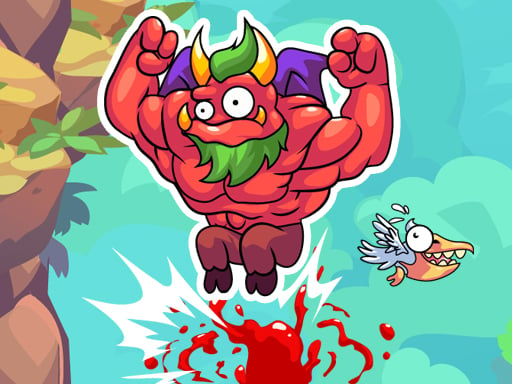
REFLEX PONG is the final and hardest pick. In this take on the classic paddle game there is a paddle on each side, and you control both. The goal is to keep the ball in play through a 2-minute countdown, while its speed and angle change as time runs down. Save your shield for the last stretch, when the screen turns red.

Related guides
To see how skill games sit next to other genres, game genres explained lays out every category side by side. If you will mostly play on a phone, browser games on phone and tablet covers screen orientation and touch controls. Sharing one computer with a friend? Try the list of 2-player games on one keyboard.
Frequently asked questions
Are skill games suitable for kids?
Most of the games in this guide are fine for children. Draw The Bridge is a calm, drawing-based game with no violence, and the ninja in Ninja Jumper never fights, it only avoids traps. For younger players, Weight Adjust Game or Dig It, which have no time pressure, tend to cause fewer tears. It is still a good idea for a parent to try a game once before handing it over.
How do I get better at skill games?
Play short and often. Skill games improve through muscle memory, and that builds with repetition. A few short sessions spread over a day do more than one long sitting. When you lose, ask why: did you press too early or too late? Knowing the direction of your mistake is half of fixing it.
Can I play them on my phone?
Yes. All twelve games here support touch. One-tap games can even feel better on a phone than on a computer. For REFLEX PONG, which needs two hands, holding the phone sideways gives both thumbs more room.
Is a skill game the same as a reflex game?
Not quite. Reflex is only one of the four groups. Weight Adjust Game and BlockStacking do not need quick reactions, but they still need accuracy and judgement, which is why they count as skill games too.