Pipe and cable puzzles: lock the forced pieces first, then build the line
Pipe puzzles and cable puzzles share one opening move: fix the pieces that have only one legal direction before touching anything else. The source, the target, pieces against the border and corner bends give you no choice, and once they are set, most of the uncertain pieces between them sort themselves out. Cable puzzles add a second question: which plug moves first so the wires never cross. Below: the rules of both families, working backwards from a forced end, a solved example and the real difference between rotating and untangling.
The rules, step by step
Games in this genre come in two families. In the pipe family the pieces stay put and you only change which way they face:
- Click or tap a pipe piece and it turns in place.
- You need an unbroken line from the source to the target, joined end to end.
- One piece facing the wrong way is enough to stop the flow.
- The moment the line is complete, the water runs and the level ends.
In the cable family you never rotate anything. You move the line itself:
- Grab a plug and drag it; the cable follows your mouse or your finger.
- The goal is to bring every plug to the right spot and leave the cables straight or separated.
- Cables that overlap or stay knotted mean the level is not finished.
Neither family has an opponent or luck. All the difficulty lies in knowing which piece to touch first.
Working backwards from a forced end
At first glance every piece looks like it could face four ways. It cannot. A bend against the border cannot point off the board, the piece next to the source must connect to it, and the last piece before the target must face the target. These fixed ends are the real clues. Turn them first, then step one square inwards and ask: how many options does this piece still have?
That is where working backwards pays off. The tip in Connecting Pipes 3D says to start at the source, and usually that is right. But once the line branches towards several flowers, the path forks. Then lock the last piece in front of each flower and walk the line a square or two back towards the source. Lines coming from both ends meet in the middle, and as the gap shrinks the right direction becomes obvious.
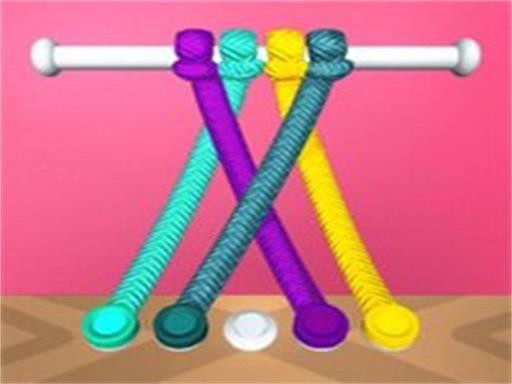
In cable puzzles the fixed end is the plug lying on top. Tangle Master 3D says so directly: find the plug that sits under no other cable and start there. Pulling a buried plug drags the cables above it along and tightens the knot.
Example: meeting in the middle of a branching line
Picture a grid five columns wide, source top left, two flowers bottom right. The top left corner holds a bend with two openings that would point off the board, so its only legal position connects right and down. Lock it. The pieces directly in front of the flowers must face the flowers, so lock those too.
Now a T-piece in the middle could face any way. The line from the source reaches its left side; the lines walking back from the flowers reach its bottom and right. So the closed side of the T must face up. Both ends settled the middle in one move. Starting in the middle, you could have turned that T four times and been wrong four times.
Tactics for lines that never cross
Cables must not cross; pipe branches must not block each other. A few habits help with both:
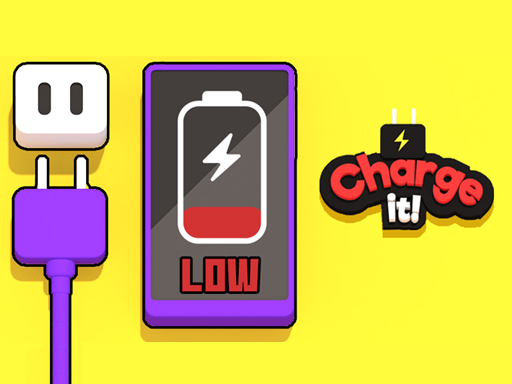
- Start at the edge. Charge My Phone! gives the same tip: connect the edge plug first, leave the middle for last.
- Curve around the others instead of taking the shortest path; arcs cause fewer clashes.
- Place the biggest piece first. In Crossroads, extending the line with the highest number first leaves room for the short ones.
- Plan for the corner. A lone empty corner square fills last, so reserve a line that can reach it.
- If two cables cross however you draw them, the order is wrong. Restart and move the other plug first.
Rotating pipes vs untangling cables
The two types sit on the same shelf but train different skills. In a pipe puzzle pieces never move, only their direction changes, so the task is choosing directions, not placing pieces. The one question per piece: given my neighbours, how many directions are left? Pipe puzzles therefore solve like a chain of logic, one piece settling the next.
In a cable puzzle the geometry is free and the order is fixed. Any route works for a plug, but which plug moves first is decided for you: top before bottom, edge before middle. The question becomes: which cable is lying under nothing right now? A wrong direction in a pipe puzzle costs one more click. A wrong order in a cable puzzle tightens the knot and often means a restart, so rushing costs more with cables.
Common mistakes
- Starting in the middle. Pieces in the middle have the most options and give you no clues.
- Clicking at random against the clock. Water Pipe has timed levels, and its own warning is right: every wrong turn costs three more to undo.
- Calling the line done without checking. Trace it from source to target with your finger.
- Dragging a cable too fast, so you cannot see whether it passes over or under.
- Forcing a tight knot. Go back to the previous plug and change the order.
Which game to practise with
New to the forced-end idea? Start with Connecting Pipes 3D, which has no time pressure. Later levels branch towards more than one target, so it is also good for practising meeting in the middle.
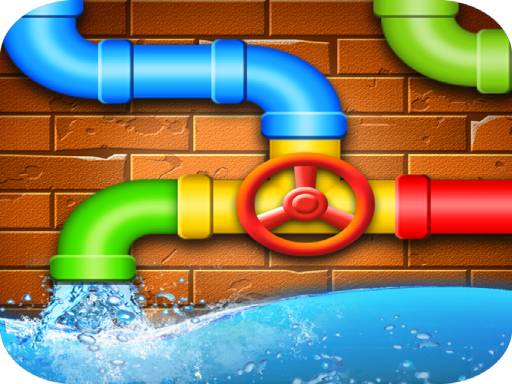
Once the method feels natural, try it against the clock in Water Pipe. Each click turns a piece ninety degrees, the grid grows level by level, and if time runs out you retry the same level.
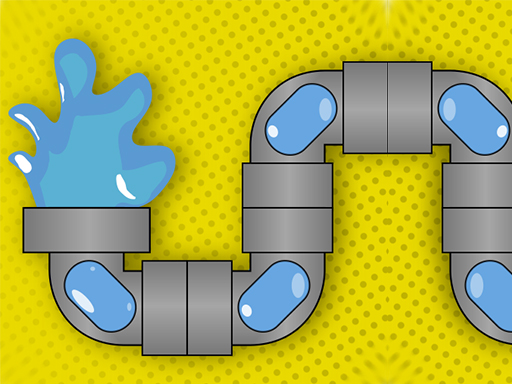
To move over to cables, Charge My Phone! is a good bridge: each plug goes to the socket of its own colour, and a crossing cable breaks the connection. For something more about order, Tangle Master 3D gives you a real tangle of stacked cables.
Crossroads sits where the two types overlap: you stretch lines until every empty square is covered, you can pull back a line that went too far, and there is no time pressure. All five are single player and work on a phone by tapping or dragging.

For a wider map, the puzzle games guide compares the main types. To practise planning ahead in another format, the water sort puzzle guide explains the empty tube rule, and the puzzle games for adults list collects calm, uncluttered brain teasers. Every similar game is in the Puzzle category.
Frequently asked questions
Should I start a pipe puzzle from the source or from the target?
On single-target levels the source is usually enough. If the line branches or the middle stays unclear, also lock the pieces in front of each target and meet in the middle.
What happens if two cables cross?
In Charge My Phone! a cable passing over another breaks the connection and you redraw it. Starting with the edge plugs is the safest route.
Which pipe game has a time limit?
Here, Water Pipe has timed levels. Connecting Pipes 3D and Crossroads let you think at your own pace.
Do these games work on a phone?
Yes. Tap a pipe to turn it, drag a plug with your finger. Nothing to download; they run in the browser.