Pin your biggest tile to a corner and keep the chain in order
The best 2048 strategy fits in one sentence: put your highest tile in a corner and never let it leave. With the big tile locked there, the next smaller value lines up beside it, then the next, and merges roll toward the corner. Let it drift into the middle and small numbers surround it until the board jams. Below: the method, the hex board, and merge games you drag or tap.
The rules in 30 seconds
Classic 2048 uses a four by four grid. Here is all you need:
- You slide the board in one of four directions, and every tile travels that way until it hits a wall or another tile.
- Two equal tiles that collide become one: 2 and 2 make 4, 4 and 4 make 8.
- A tile can merge only once per move, so a row of 2, 2, 4 slid left becomes 4, 4, not 8.
- After every move a new low tile appears in an empty cell, usually a 2, sometimes a 4.
- When the grid is full and no neighbours match, the game is over.
The target is the 2048 tile, though most versions let you play on. Every merge adds to your score, so survival time is what really drives it.
The corner method: where the big tile lives
Pick a corner, say bottom left. From now on you play mostly with two directions: left and down. Right is your spare third direction. Up is the one move that can pull the corner tile out of place, so save it for when nothing else is possible.
Why does this work? A corner tile has walls on two sides, so only two cells can ever touch it. A middle tile has four neighbours, and a random 2 can land beside it on any of them. While the big tile stays put, the rest of the board works like a workshop feeding it.
Keep the bottom row full too. A full row cannot shift when you slide left or right; a row with a gap lets the corner tile slip sideways. Fill it early, even with a small number pushed in on purpose.
Keep the order: the snake pattern
The corner alone is not enough; the order next to it matters too. The sturdiest layout is a bottom row that shrinks as it moves away from the corner: 512, 256, 128, 64. When the row runs out, step up one row and keep shrinking in the opposite direction: 32, 16, 8. Players call this winding line the snake.
The payoff is cascades: when the small end merges, the result matches its neighbour, which merges too, and the chain rolls to the corner. Break the order, say a stray 4 sticks beside your 256, and that 256 is frozen until the 4 grows all the way up.
Before each move, check where the new tile could drop: a move that opens a gap in the bottom row invites a 2 into your snake.
Worked example: the corner under threat
Say your bottom row reads 256, 128, 32 from left to right, and the last cell is empty. Directly above that 32 sits another 32. You have three options:
- Swipe down and the upper 32 lands on the lower one to make 64. The bottom row becomes 256, 128, 64, a clean descending line. This is the move.
- Swipe left and nothing in the bottom row moves, because it is already packed against the wall, but nothing merges either. A wasted turn.
- Swipe right and, because of the gap, your 256 slides one cell away from the corner. A fresh 2 can then drop into the corner. This is the worst move on the board.
The rule to take away: while the bottom row has a gap, never swipe away from your corner. When the row is full, a swipe to the right is safe because a full row cannot shift; the dangerous direction becomes up.
Hex 2048: six directions change the plan
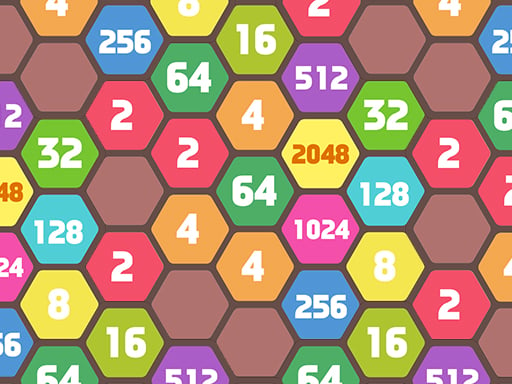
2048 Hexa Merge Block turns the square grid into a honeycomb. Tiles can slide in six directions, so you cannot copy the corner method as it is. On a square board a corner is where two walls meet. On a hex board an edge cell can still be hit by slides coming from other angles.
The game itself points the way: lean your biggest tile against one edge and only play directions that leave that edge intact. Pick two, at most three, main directions and keep the rest for emergencies. A descending line along that edge is the hex snake.
The second difference is the middle. A central hex cell has six neighbours, so small numbers piling up there jam the board from every side. Steer them toward the end of your edge line and trace the merge chain with your eyes before you slide. You play by dragging with the mouse or swiping along the hex directions on a phone.
Same logic, different controls
Unicorn Merge swaps numbers for a chain of cute pieces, but the rules match 2048: slide four ways, two identical pieces become the next level, a new piece arrives after each move. Corner and snake work exactly as described; you just learn the order of the pieces instead of reading numbers. Arrow keys, mouse or finger swipe all work.

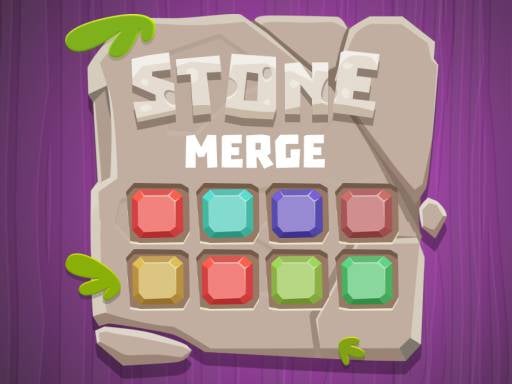
Stone Merge never slides the whole board. You drag one stone at a time onto a stone with the same number, so nothing moves that you did not choose. The corner idea still applies: line up large numbers along one edge, because a big stone in the middle blocks the others. When two merges are available, do the lower one first.
Get 10 Ultimate is played by tapping: click a group of matching neighbours, they fold into one tile a step higher, and new numbers fall in from above. Here the corner method means gathering high numbers in one corner so they eventually meet. Rather than merging every pair, look for groups of three or four, which climb faster.

Common mistakes
- Using all four directions equally. Random swiping holds up for a few hundred points, then the big tile wanders off.
- Grabbing every merge the moment you see it. Waiting one move can let you make the same merge in a direction that protects the corner.
- Leaving gaps in the bottom row. An empty cell there is an open door for your corner tile to leave.
- Chasing new merges on a crowded board. Once the grid is more than half full, clear the small pairs you already have; Unicorn Merge gives the same advice.
- Treating the hex board like a square one. With six directions there is no corner guarded by two walls, so build around an edge.
Which game to practise with
Start with Unicorn Merge: four directions, classic rules, quick arrow key testing. Once the order habit sticks, try the hex version along an edge. Get 10 Ultimate suits a relaxed session, Stone Merge a slow, move-by-move one. All four are single player and run on a phone.
Curious where merge games sit among other matching games? Our matching games guide lays the families side by side. If you prefer placing pieces to sliding them, the block puzzle strategy post applies the same keep-space-open thinking to a different board. More titles live in the matching category.
Frequently asked questions
Which corner is best in 2048?
It does not matter; what matters is staying loyal to one. Most players pick a bottom corner, so the main directions become down and sideways.
Does the game end when I reach 2048?
In most versions, no. In 2048 Hexa Merge Block you can keep chasing a higher score after the 2048 tile until the board locks.
Can I undo a move?
These games do not promise an undo. For Unicorn Merge the safest approach is to scan the whole board before every slide.
Is 2048 mostly luck?
The new tile lands at random, but you decide how much that can hurt. With a guarded corner and an ordered chain, a bad drop is usually repaired in a move or two; on a messy board it can end the run.