How the centre of gravity solves physics and balance puzzles
In physics puzzle games, one idea does most of the work: keep the centre of gravity low and close to the pivot. On a balance scale that means placing the heaviest piece first and near the middle. In a launch puzzle it means sending the mass along the right arc. In a knockdown game it means spreading the energy over several bounces instead of one big hit. Below you get the rule in plain words first, then game by game.
The physics rules behind these games, step by step
Almost every game in this family leans on the same handful of rules. Once they click, you can predict what a new level will do before you drop a single piece.
- Gravity pulls every piece down. An object behaves as if all its weight sat at one point, its centre of gravity.
- A structure stays put while that point is directly above its support. The moment it drifts past the edge of the support, the whole thing tips that way.
- The further a piece sits from the pivot, the harder it turns the beam. A light object at the tip can beat a heavy one near the centre. This is the classic seesaw effect.
- Anything you throw follows a curve. More power stretches the range, a different angle moves the landing spot.
- A collision passes energy along. A mass that bounces off walls makes more contacts than one straight hit.
That is basically the lever lesson from school science, trimmed down. Browser games are never as strict as a lab, but the direction is always right: heavy things want to go down, and weight far from the pivot turns more.
Balance scale puzzles: heaviest piece first
Weight Adjust Game hands you a set of weights and asks you to level two pans. There is no lever here, only totals: when both pans add up to the same number, the scale sits flat. So the fastest route is to start with the biggest weight. Put it in one pan and the gap you still have to close becomes obvious; the small weights just fill it in.
Weight Puzzle Game goes a step further. You drag objects onto pans or marked points, and position starts to matter. A heavy-looking piece near the pivot barely tilts the beam; the same piece at the far end tips it at once. On top of that, size does not always give away weight, so two objects of the same size can pull differently.
A worked level: 5, 4, 3 and 2
Say you get four weights: 5, 4, 3 and 2 units. The total is 14, so each pan needs 7. Drop the 5 into the left pan. The left side is now 2 short and the right side still needs 7. Add the 2 to the left and it reaches 7. The 4 and the 3 go right, which also makes 7. Four moves, no undo.
Start with the smallest piece instead and you might put the 2 left, the 3 right, then guess where the 4 and the 5 belong. Going big first shrinks the options that are left. The same order works on lever puzzles: heavy piece close to the pivot first, then fine-tune with light pieces out at the ends.
Launch and knockdown: force, angle and bounce
Clever Crow turns the old fable of the thirsty crow into a slingshot. You pull down from the crow and let go, and the stone flies in an arc toward the narrow neck of the jug. Balance gives way to trajectory here. Watch where one shot lands, keep the same power, and change only the angle on the next try. In windy levels, aim a little higher so the stone drifts into the neck.
Kick The Snowman Xmas does the opposite: instead of keeping something steady, you knock it over. Click to push the snowman or drag to fling it, and every impact scores points. The trick is to spend the energy through wall bounces rather than one big blow. If you want to see how the angle steers a rebound, the same logic with bullets is in our ricochet puzzle guide.
Stack Ball 2 is not a full physics engine, but it tests when to apply force. Hold and the ball speeds up, smashing the coloured floors; release and it bounces in place. Break several floors in a row and the ball catches fire. Lifting your finger as a black floor comes around is the balancing act here. The spinning-tower style is covered in detail in Helix Jump tips.
See the rule for yourself in a sandbox
If you want to watch physics behave before solving levels, Physics Sandbox is a good test bench. Sand piles up, water fills gaps, gas rises and lava melts what it touches. No score, no timer. Draw a container, pour sand into it, then erase one wall: watching which way and how fast the sand pours out shows, very concretely, that heavy stuff takes the shortest way down.
What this adds to scale puzzles: a sand pile rises in the middle and spreads out at the sides, and a pile with a wide base never tips. The same principle holds in every tower game. A wide base means a low centre of gravity.
Common mistakes
- Judging weight by size. In Weight Puzzle Game two objects of the same size can weigh differently; when unsure, put them in opposite pans and compare.
- Placing every piece at once and hoping. Add one piece, watch how far the beam moves, and you will see exactly where it went wrong.
- Changing angle and power together on a launch. Lock one, adjust the other, or you will never know which change helped.
- Relying on one hard kick in a knockdown game. With the snowman, chains of bounces usually bring the points.
- Wasting the first stone on a test shot in a limited-throw level. In the crow levels, every throw matters more as the stones run out.
Which games to practise with
A good order: the pure sums of the scale first, then the lever puzzle where position counts, then launching and knocking down. All of them play with touch on a phone as well. For a wider list, try the puzzle games guide and the simulation games page.
 ▶Weight Adjust Game - Free Balance Puzzle
 ▶Weight Puzzle Game - Free Balance Scale Puzzle
 ▶Clever Crow - Free Physics Puzzle Game
 ▶Kick The Snowman Xmas - Free Physics Game
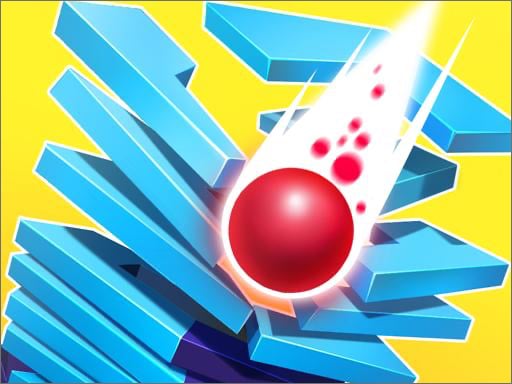 ▶Stack Ball 2 - Free 3D Skill Game in Your Browser
 ▶Physics Sandbox - Free Online Physics Simulation
Keeping the centre of gravity low also decides games where you pile pieces on top of each other; the timing of the drop is explained in stacking games.
Frequently asked questions
Do I need maths for balance games?
For scale puzzles, simple adding and subtracting is enough. The hard part is seeing which piece goes where, not the arithmetic. On lever levels, a good eye and small tests beat calculation.
Why does my scale keep tipping the same way?
Most likely a heavy piece sits too far from the pivot, or the totals simply do not match. Slide the outer piece inward; if that fails, move a light piece to the other pan.
Do physics games copy real physics exactly?
No, most are simplified. Gravity, arcs and collisions point the right way, but the numbers are tuned for fun. Trust the rule, not the decimals.
Is there a game where I can experiment without losing?
Physics Sandbox has no end condition at all. Kick The Snowman Xmas has no losing either; your measure is the best score in a single round.