Which gate grows your crowd faster in a crowd runner game
In a crowd runner game, a multiply gate only beats an add gate once your crowd is big enough. A x2 gate gives you as many new runners as you already have; a +20 gate always gives you 20. With 12 runners the +20 goes further, with 25 the x2 wins. The in-game hint 'always pick multiply' is usually right because your crowd grows along the track, but at the first gates, with a tiny group, the plus gate often wins. Here's a quick way to spot the break-even point, why gate order matters, and how many runners you need at the finish.
How crowd runner games work
The look changes, the skeleton doesn't:
- Your crowd runs forward on its own. You only steer left and right. In Crowd runner 3D you hold the left mouse button and drag; on a phone you drag with your finger.
- Two gates appear side by side. You pass through one and the other one is gone.
- Gates carry an add (+), subtract (-), multiply (x) or, in some games, divide operation. Super Count Masters uses all four: green gates grow your army, red gates shrink it.
- Saws, obstacles and narrow passages knock off every runner they touch.
- At the end a rival crowd, a stack or a castle waits. The two sides cancel each other out and the bigger number wins. Fall short and you replay the level.
Multiply or add: finding the break-even point
When the gates come up, ask one question: how many runners does this multiplier add right now? A crowd of n that goes through a xm gate gains n times (m-1). A +a gate always gives exactly a. Take whichever number is bigger.
- x2 next to +a: multiply if your crowd is bigger than a. At 15 runners, x2 is worth exactly +15, so a +20 next to it wins.
- x3 next to +a: multiply if your crowd is more than half of a. At 12 runners, x3 adds 24 and beats +20.
- x5 next to +a: your crowd only needs to be over a quarter of a. Even a group of 8 gains 32 runners through x5.
Too slow to divide in your head? Think of x2 as 'one more copy of my crowd'. If that copy beats the plus number, multiply. Count Master 3d Game says as much in its description: you don't calculate, you just compare two numbers.
Gate order: add first, then multiply
Order changes the result. Start with 10 runners. Take +10 then x3 and you finish with 60; take x3 then +10 and you're stuck at 40, because runners from the plus gate get multiplied too. So early plus gates matter; the real job is to carry that group safely to the next multiplier.
Losses flip the logic. Lose 5 runners to a saw right before a x3 gate and it costs you 15; lose them after the gate and it costs 5. Take risks once the multiplier is behind you.
Bad gates: subtract or divide
Sometimes both gates hurt, so compare the loss. Halving takes half your crowd; -a takes exactly a. At 30 runners, halving costs 15 and -10 costs 10. Pick the minus gate when its number is under half your crowd. With a tiny group it flips: at 6 runners, halving leaves 3, while -10 wipes you out.
A worked example: how many runners reach the rival
You start with 5. First pair: +8 or x2. The x2 is worth 5 new runners, the +8 is worth more, so you add and reach 13. Second pair: x3 or +20. The x3 is worth 26, more than 20, so you multiply to 39. Then the edge of your group clips a saw and you drop 6: 33 left. Third pair, two bad options: -10 or divide by 2. Halving costs about 16, the minus costs 10, so you take -10 and land on 23. Last pair: x2 or +30. Your copy of 23 is smaller than 30, so you add and hit the rival with 53.
Against 40 rivals you come out with 13 and clear the level. Picking every multiplier blindly would have gone 10, 30, 24 after the saw, 12 after halving and 24 at the end: not enough for 40.
How big a crowd you need for the final boss or castle
There's no single number; every level sets a different rival. Two habits help. Compare roughly as soon as the rival or castle comes into view: if you're not clearly ahead, you need the bigger-payoff gates for the rest of the run. And if you're well ahead, stop gambling. A tip in Count Master 3d Game says it plainly: on the final stretch a small but safe gate is enough to take the castle.
Crowd runner 3D adds that the gap is often closed at the last gate before the clash, so don't miss that one.
Obstacles and the width of your crowd
A bigger crowd takes up more of the track, so edge runners clip obstacles more easily. Crowd Rush Game suggests centering your group before narrow passages and skimming a saw with your edge instead of driving through its middle. At gates, follow each game: in Count Master 3d Game, aim for the exact middle, or edge runners may miss the gate.
Common mistakes
- Picking the multiplier every time while the crowd is still small. At 6 runners, x2 loses to +15.
- Swerving into a gate at the last second. Part of the group drifts through the wrong gate or misses it.
- Diving into a risky obstacle right before a multiplier; the loss gets multiplied too.
- Choosing between two bad gates without comparing what each one costs.
- Gambling on the final stretch when you're already far ahead.
Which game to practise with
Crowd runner 3D and Count Master 3d Game teach gate math most clearly. Both work with a mouse or a finger and end with a rival or a castle. We file Count Master 3d Game under puzzle, since comparing numbers is the whole point.


Super Count Masters adds divide gates, handy for practising the two-bad-gates case. Crowd Rush Game uses only A/D or the arrow keys, so play it on a computer, not a phone; the runners you bring to the finish become your score.


Some runners skip multipliers but use the same build-up logic. Run Giant 3D and Long Neck Run want your own color, and the wrong one shrinks you. Stacky Dash spends what you collect as you lay the path, and Run Rich 3D rewards lane choice. In all four, your size at the finish decides the result.
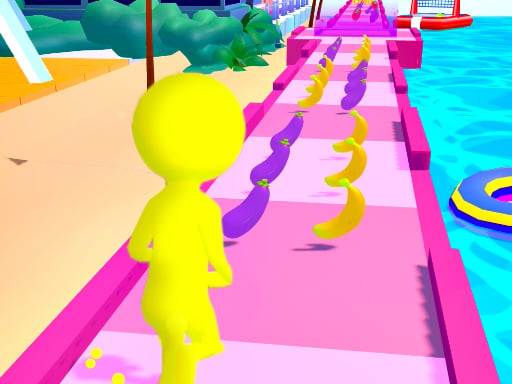 ▶Run Giant 3D - Free Running Game Online
 ▶Long Neck Run - Free 3D Color Ring Runner
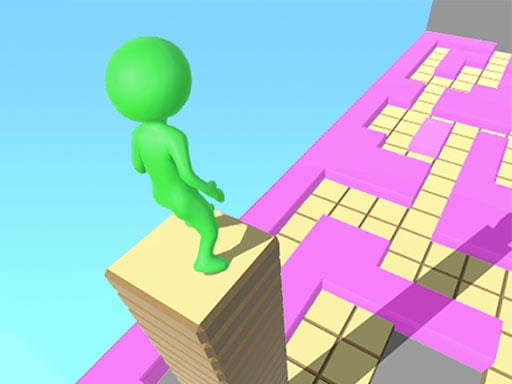 ▶Stacky Dash - Free 3D Brick Laying Runner
 ▶Run Rich 3D - Free Money Collecting Runner
For endless runners and the rest of the genre, read our running games guide or browse the running games category. More stickman titles are on the stickman games page, and for number practice aimed at kids, see games that teach the times tables.
Frequently asked questions
Is a multiply gate always better?
No. x2 wins only when your crowd beats the plus number. Later in a level that's usually true; at the first gates it often isn't.
Do I need to be good at math?
No. Comparing two numbers is enough. For x2, compare your crowd with the plus number; for x3, compare it with half of the plus number.
Can I play these on a phone?
Every game in this post except Crowd Rush Game is played by dragging with your finger. Crowd Rush Game needs a keyboard.
What happens when I lose a level?
You replay it. Usually the culprit is a multiplier picked with a tiny crowd, or an obstacle hit just before one.