Seven puzzles that reward trying and planning, plus a hint method
When you pick problem solving games for a kid aged 7 to 12, check three things. Is a mistake cheap, meaning the level restarts in seconds? Is there no timer? Does the solution come from a plan or from what earlier attempts taught, not from a lucky tap? The seven puzzles below pass all three. The second half of this guide gives you a four-step hint ladder for when your child gets stuck, so you can help without handing over the answer. We don't claim these games make anyone smarter; we pick games that ask a child to try, observe and plan.
What makes a good problem solving game?
Not every puzzle does the same job. For this list we looked for four things:
- Cheap mistakes: a wrong move isn't punished, one tap starts the level again.
- Time to think: no countdown, your child can stare as long as they like.
- Visible rules: you can see cause and effect on screen. Water falls, stones get pushed, a gate only connects from one side.
- Gradual difficulty: early levels introduce a rule, later ones ask the same rule in messier layouts.
With all four in place, a mistake becomes information: the pin pulled in the wrong order says what to change next time.
Trial and error, or a plan?
Splitting puzzles into two working styles helps you choose. In some games the fastest route is to experiment: pull a pin, watch what happens, restart, and you've learned something. In others, experimenting is expensive, because one wrong direction leaves you in a dead end. There you trace the whole route in your head before moving.
An impatient child, or one who hates being wrong, settles in faster with trial-friendly games; a quiet planner enjoys the ones where each move counts. Most kids end up mixing both.
Picks by age
Ages 7 to 8
Games that show the result instantly work best. Pin-pulling and draw-a-shield puzzles show cause and effect within seconds. The first water sorting levels are a calm start too.
Ages 9 to 10
Kids who can think two or three moves ahead are ready for the bear heading home or the rabbit collecting carrots between ice walls. Order matters here: which carrot first, which stone?
Ages 11 to 12
Games where experimenting is costly and the route has to be planned fit this age. The two-path levels of the forest path puzzle and the sliding path puzzle might even send your child looking for pencil and paper.
How to give hints to a stuck child
The easy move is to show the answer, but then you solved the level. Try these four steps in order and stop at the first one that works.
1. Ask, don't tell
Ask a question without pointing at anything: What falls if you pull this pin? If you fill this tube now, will you have an empty one left? A question steers their eyes to the right spot and lets the idea be theirs.
2. Point to one detail
If a question isn't enough, point at the key detail but don't say what to do with it. Which way does the gate's arrow face? On which square does the enemy turn around? You give them the missing information, not the solution.
3. Find the first move together
Still stuck? Agree on only the first move. Working backwards from the goal helps: which square must the last step come from, and the one before that? Leave the rest to them.
4. Show it, then replay it
If nothing works, show the solution, then restart the level and let your child play it with their own hands, explaining why it works. If they're tired or frustrated, a break beats step four; the same level often clicks at first glance the next day.
Seven puzzles, seven kinds of thinking
The details below come from each game's own page. All seven are single-player and work with touch on a phone.
Pin Rescue
Pin Rescue asks you to free a trapped character by pulling pins in the right order. The wrong order fails the level, but one tap restarts it: trial and error at its purest. Our guide on which pin to pull first goes deeper.

Sort Color Water Puzzle
Sort Color Water Puzzle is a calm logic game about order: water only pours onto the same colour or into an empty tube, and when you use the empty tube decides the level. No move limit. For a step-by-step method, see how to solve water sort puzzles.

Draw and Save Stickman
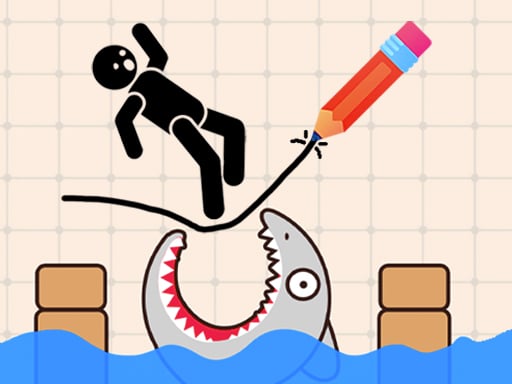
Draw and Save Stickman has you predict where danger will come from and draw a line in its way. Cracks and shadows in the scene are the clues, and the amount you can draw is limited. The hazards are cartoonish, but take a look at one level yourself before giving it to a very young or sensitive child.
Bear Go Home
Bear Go Home is a path puzzle full of pushable stones, pressure plates and doors. There's an undo button, so your child can experiment without fear, and there's no clock. A stone pushed into a corner shows on its own why thinking two moves ahead matters.

Reds Winding Way
In Reds Winding Way you lay and rotate path tiles to lead Little Red Riding Hood to her grandmother's house. There are a hundred levels over four forest areas and no timer. Later boards need two paths that never cross; of the seven, this one asks for the most planning.

Rabbit Carrot
Rabbit Carrot has you toggle ice walls so a pixel rabbit can collect carrots and reach the exit. Enemies follow fixed routes, so a child who watches the pattern can find the right moment. Levels aren't timed, and a failed attempt simply restarts.

Freight
Freight slides your character in the chosen direction until it hits something. Obstacles work as brakes here: you need them to stop on the right square. One wrong direction can mean a dead end, so trace the route to the finish before you move.

Parent checklist
- Can a wrong move be retried quickly?
- Is there a timer, and if so, how does your child react to it?
- When they're stuck, do you go question, then detail, then first move?
- Did you agree beforehand whether you stop after a level or after a set time?
- After solving a level, can your child tell you how they did it?
To see every puzzle type on one page, start with the puzzle games guide. For maths and memory, try the educational games guide. If you want a wider selection without weapons or fights, read non-violent games for kids, or browse the puzzle and educational categories.
Frequently asked questions
Do these games really teach problem solving?
No game can promise that on its own. These puzzles invite a child to try, observe and plan; talking afterwards about how they did it helps the habit travel.
My child keeps getting stuck on the same level. Should I give the answer?
Climb the hint ladder first: question, detail, first move. If none of that works, show the solution and replay the level straight away. If they're frustrated, a break usually does more than the answer.
Which game should we start with?
For a child who hates mistakes, start with Pin Rescue; for a calm thinker, the water sorting puzzle. If the early levels feel easy, move on to the bear or the rabbit, and from there to the forest paths.