Sliding puzzle: finish the top row, then the left column, then rotate
A sliding puzzle is solved in a fixed order, not by random moves: finish the whole top row, then the left column, and the puzzle shrinks by one row or column each time. What remains at the end is a 2x2 corner, which you finish by rotating three tiles around the gap. The spot where most people get stuck is the last two tiles of a row, and there is a well-known trick for it: set the two tiles up in reverse and slide them in together. Here is the method step by step, with a solved 3x3 example.
The rules, step by step
The best-known version is the classic 15 puzzle: tiles numbered 1 to 15 on a 4x4 board. In picture versions the numbers are replaced by pieces of a photo, and the rules stay the same:
- There is exactly one empty square on the board.
- You can only slide a tile that sits right next to the gap, into the gap.
- You cannot lift tiles out or slide them diagonally.
- Once every tile is in place, the picture is complete.
With a picture, it helps to number the tiles in your head: top left is 1, the one to its right is 2, and so on, row by row. That way you know every tile's home address.
Why the top row first, then the left column
The core problem is that moving one tile home tends to knock others out of place. The row by row method fixes that with one rule: once a region is finished, you never touch it again. With the top row done, a 4x4 puzzle becomes a 3x4 one. With the left column done, a 3x3 is left. Repeat the same two steps and the puzzle keeps shrinking.
Why the column too? If you only did rows, the last two rows would be a long narrow strip with very little room to turn tiles around. Alternating row and column keeps the remaining area square. The tip in the sports car sliding puzzle says the same: finish the top row and left column first, then never touch that area again.
Moving a single tile home
When you move a tile, what you are really moving is the gap. To push a tile right, bring the gap to its right side, then slide the tile in. To move it one more square, walk the gap around the tile and put it in front again. That loop usually takes five moves and it is the move you will repeat most.
The key point: never walk the gap through a finished row. Always route it through the open, unsolved area. It feels slow at first; after a few tiles your hands learn it.
The last two tiles trick: set up in reverse, slide in together
The first tiles of a row go in easily. The trouble is the final pair: if you place the second to last tile, there is no way left to bring the last one beside it, because the gap can only get there by moving the tile you just placed. The fix is to treat the pair as one unit.
On a 3x3: tile 1 is home in the top row, and 2 and 3 are next. Bring 2 not to its own spot but to 3's spot, the top right corner. Then bring 3 directly under it, at the right end of the middle row. Put the gap on 2's real spot, the middle of the top row. Two moves left: slide 2 left, slide 3 up. The top row reads 1 2 3.
The left column works the same way, turned on its side. Put 4 in 7's spot, the bottom left corner; put 7 to the right of it; bring the gap to 4's real spot. Slide 4 up, slide 7 left. The tips for Pandas Slide are honest about this moment: placing the last tiles means turning the board back a few moves, and that is normal.
Example: rotating the final 2x2 corner
Once the top row and left column are closed on a 3x3, four squares remain bottom right: 5, 6, 8 and the gap. The only way to sort them is to rotate the three tiles around the gap in the same direction. Go round clockwise a few times and each tile passes through every position until 5 and 6 sit on top and 8 below.
If two tiles stay swapped however long you rotate, the mistake happened earlier, not in the corner. In the classic 15 puzzle, a layout where only two tiles are swapped cannot be solved; if that is what you see, you probably closed an earlier row wrongly. Restart and check each row as you go.
Common mistakes
- Starting at the bottom or in the middle. You keep breaking what you already finished.
- Pushing a row's last tile straight in. Bring it with the tile before it, set up in reverse.
- Walking the gap through a finished row. It looks like a shortcut and wipes out your work.
- Jumping straight to 5x5. The tip in the pickup truck sliding puzzle is right: work out the logic on 3x3 first, then move up.
- Clicking at random in the last corner. Rotate the four squares in one direction only.
Which game to practise with
Trying the method for the first time? Start with the pickup truck sliding puzzle on 3x3. It has three pictures and three sizes from 3x3 to 5x5, with no time pressure. Nail the last two tiles trick on 3x3, then try the same picture on a bigger grid.
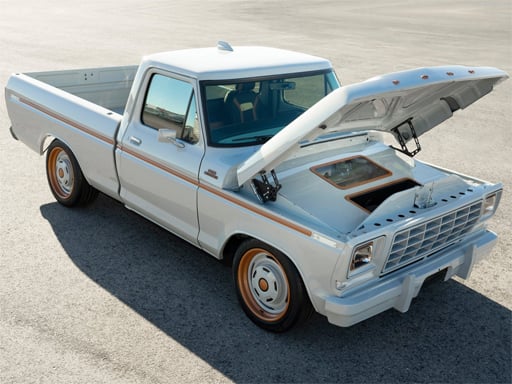
The sports car sliding puzzle has the same setup: 3x3, 4x4 and 5x5 modes, and you can restart with a different picture or mode from the menu. Its 4x4 mode is the same size as the classic 15 puzzle, so it is the right place to try the method at full scale.

Pandas Slide, with three panda pictures and three difficulty modes, is a good one to play alongside a child. The panda's eyes and ears are easy landmarks, so it is simple to tell where each tile belongs.

BearShift is a different kind of sliding puzzle: there is no single gap, blocks only slide along their own axis and the goal is to clear an exit path for a bear. Looking back from the exit and finding the right order helps here too, and there is an undo and restart button. All four are single player and work on a phone by tapping or dragging.

For classic jigsaws, where you drag and drop pieces instead of sliding them, the online jigsaw tips explain the edges-first method. The puzzle games guide maps out the wider genre, and more animal-themed games like the pandas are in the animal games guide. Similar games live in the Puzzle and Animal categories.
Frequently asked questions
Can every sliding puzzle be solved?
If the tiles were shuffled with legal slides, yes. In the classic 15 puzzle, not every layout placed by hand can be solved; the best-known example is one where only two tiles are swapped.
Does the method change on 4x4 and 5x5?
No, you just repeat it more. Close the top row, then the left column, and keep going until a 3x3 is left. The last two tiles trick is the same for every row and every column.
How many moves should it take?
There is no set number, and the games here have no countdown. Get the method right and speed follows. When you solve the same picture a second time, you will notice you need fewer moves because you already know where the tiles go.
Is it suitable for children?
It is a calm, non-violent logic puzzle. For younger players, the 3x3 mode and an easy-to-read picture like the pandas are a good start; 5x5 calls for patience and planning.