How to stop falling in climbing games: slow down, pick holds, lose less
In a climbing game, what sends you back down is almost never difficulty. It is hurry. The short answer: check that the next hold is close and solid before every move, jump onto a moving rock only after you have seen its rhythm, and after a slip, win the height back with several short, safe moves instead of one big gamble. Below, each habit is shown with six games from the site.
The basic rules of climbing, step by step
- Stop, then look: If your character is safe on a hold and the game is not pushing you upward on its own, waiting a second costs you nothing.
- Pick the target: The next hold should be close and also wide enough to land on. A long shot at a tiny ledge is riskier than a short hop to a big rock.
- Read the rhythm: If a rock or hold moves, watch it go back and forth two or three times. Regular movement means you can predict the next pass.
- Finish one move before the next: Wait until the character has settled on the new hold. Mashing the button usually wastes the input.
Grip types: what each game is really testing
Every climbing game is about going up, but the way you hold on differs a lot. Knowing the type helps you see where a mistake came from.
Timed jumps
Kara Climb and Climb Man take a single click or tap, so your only decision is when. In Kara Climb the gaps between stones widen as you rise. In Climb Man the hero hangs from a swinging or sliding rock and the rock above moves too, so you aim for where it will be when you click.
Slingshot launches
Blob Climbing is a slingshot: pull the blob back, let go, and it sticks to whatever rock it touches. The further you pull, the further it flies. A bad shot does not end the climb; the blob drops and you climb the lost height again.
Stretching arms
Stretch Guy feels different. You drag one hand at a time to a new hold while the body stretches like rubber; if the hands get too far apart, the character lets go. It sits in the kids category and goes level by level, a good first climbing game for younger players.
Walls and lanes
Stickman Climber uses two buttons: one jumps to the opposite wall, the other flips direction to dodge bombs. Jungle Climber climbs on its own while you slide the monkey with A and D or the arrow keys to avoid rocks, icicles and fireballs. Here speed is not yours to set, so patience means planning each move.
How to choose your next hold
A good hold is close, wide, and a good starting point for the move after. That third point is the one players forget: an edge rock may be easy to reach but leave an awkward angle to the next one.
So in Blob Climbing, put the aim line on the body of the rock, not its rim. In Stretch Guy, make sure one hand is stuck to a solid surface before sending the other far away; a hand left on nothing drags the character down. Two short reaches keep the tension lower than one long one.
Timing a swinging rock
The rule for jumping onto a moving target is simple but feels backwards: look at where the target is heading, not where it is. In Climb Man, for a rock sliding to the right you need to click a little before it lines up, because the rock keeps moving while the hero is in the air.
Count in your head how long the rock takes to go from one end to the other. After two or three passes the rhythm settles, because the movement is regular, not random. In Kara Climb the same counting becomes the tempo of your jumps: timing tightens as you rise, so a short pause before each jump beats chaining stones together.
Losing less when you fall
The cost of a fall depends on the game. In Kara Climb, Climb Man and Stickman Climber a fall ends the run, so you lose less by taking fewer risky moves. The diamonds in Climb Man are tempting, but a fall costs you the ones from that run too.
In Blob Climbing a fall only drops you a few rocks. The danger is the next few seconds: angry full-power shots can send you lower still. Breathe, take a short shot to the nearest big rock and win the ground back step by step.
Jungle Climber handles losses with items. The banana gives you a second chance, and the chili pepper rockets the monkey up for a moment while nothing can hurt it. Save the pepper for a heavy shower of obstacles overhead.
Example: two moving rocks
You are high up in Climb Man, close to your best. The rock above swings side to side and the next one moves the opposite way. Instinct says click twice fast. Instead, watch the next rock swing twice and click just before it reaches the middle. Once you hold on, stop and restart the count for the second rock. Two separate decisions drop you far less than one rushed combo.
Common mistakes
- Speeding up near your record. Rushing when the top is in sight is the classic reason for a fall.
- Shooting at full power. Small rocks in Blob Climbing need short shots.
- Pressing the flip button in Stickman Climber the moment you see a bomb. The game itself suggests turning as you approach it; turning too early can put you straight into the bomb.
- Forgetting the body in Stretch Guy. Even with both hands clear, the hanging body can touch the spikes.
- Falling at the same spot again and again without changing anything. By the third fall, the problem is target choice, not speed.
Which game to practise with
The simplest start is Kara Climb: one click or one tap, with a normal and a hard mode. Reaching the top a few times in normal mode before switching to hard builds a feel for the distances. Move on to Climb Man to get used to moving targets. Blob Climbing teaches power and angle.
 ▶Kara Climb - Free Rock Jumping Climbing Game
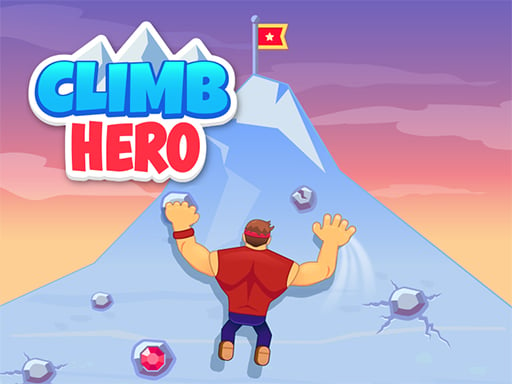 ▶Climb Man - Free Timing Based Climbing Game
 ▶Blob Climbing - Free Drag and Launch Climbing Game
If you are playing with a child, Stretch Guy is a good pick; it goes level by level and works on a phone by dragging with a finger. Stickman Climber trains quick decisions, while Jungle Climber needs a keyboard, so play it on a computer.
 ▶Stretch Guy - Free Climbing Game in Your Browser
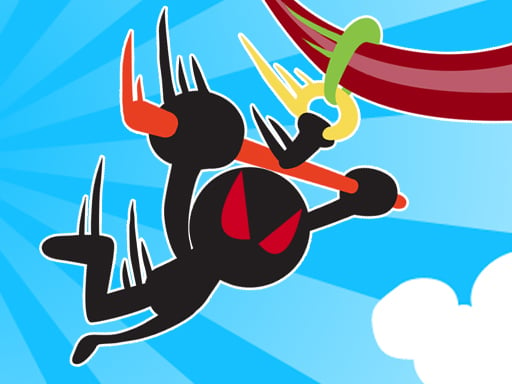 ▶Stickman Climber - Free Wall Jump Climbing Game
 ▶Jungle Climber - Free Climbing Game Online
For the tough side of climbing, our list of games that test your patience covers Kara Climb and Blob Climbing. For jumping on flat levels see platformer tips on double jumps and timing, and for the genre the platform games guide. More stick figures are on the stickman games page, more climbs in the platform category.
Frequently asked questions
Can I play climbing games on my phone?
Five of the six games here work on a phone with a tap or a finger drag. Jungle Climber is played with A and D or the arrow keys, so it needs a computer.
Why do I start over when I fall?
In Kara Climb, Climb Man and Stickman Climber a fall ends the run and your score is the height you reached. In Blob Climbing you only slide down a bit and the run continues.
Which one suits a young child?
Stretch Guy is in the kids category and moves level by level, with a gate at the end of each one. Kara Climb is also easy to understand because it only needs a single tap.
How do I beat my high score?
Slow down as you get close to it. The higher you are, the smaller your margin for error, so a short pause before each move beats fast streaks.