What do four, five and L-shaped matches give you in match-3 games?
In match-3 games the shape of a match matters more than the match itself. A straight three clears three pieces. A four leaves a special piece that sweeps a row or column; a five gives an even stronger bonus. Swap two specials into each other and much of the board goes in one move. Play near the bottom and falling pieces build new lines on their own, handing you free cascades. Here is which shape gives what, and how to build it on purpose.
The basic rules, step by step
- You swap two neighbouring pieces. Only horizontal or vertical neighbours can swap, never diagonal ones.
- If the swap puts at least three identical pieces in a horizontal or vertical line, they clear. In most games a swap that makes no line simply snaps back and does not cost a move.
- Pieces above the gap drop down and new ones fall in from the top.
- If that drop forms a new line, it clears too. This is called a chain or cascade.
- Each level has a goal and a limited number of moves: collect a set number of one piece, or push your score as high as you can.
On a computer you click and drag; on a phone you push a piece towards its neighbour. The skill is in the layout, not the controls.
Which shape gives which power-up
Once you know the special pieces, you stop hunting for threes and start looking for the missing piece of a four or a corner. The mapping below is the general logic of the genre; games vary in artwork and details, so check once in the early levels what each shape produces.
Straight four: the line sweeper
Line up four of a colour and all four clear, leaving a special piece behind in one of their spots. Set it off and a full row or column clears. Alchemist Lab shows this clearly: a four-stone match builds a bonus that sweeps a whole row. You usually spot a four in a line with a gap in it: when you see a pattern like X X _ X, look for the piece that can slide into the gap.
L and T shapes: the bomb
When pieces of one colour meet on both a horizontal and a vertical line, forming an L or a T, many games in the genre give you a bomb that blows up its surroundings instead of a line. Candy Shuffle Match-3 mentions both effects side by side: special sweets that sweep a line and ones that blow up their surroundings. To build an L, look for the spot where two separate threes could share a corner.
Straight five: the strongest bonus
Five in a row is the hardest shape and pays the most. In Alchemist Lab five stones build something stronger than the row sweeper; in many match-3 games this piece clears every piece of the colour you swap it with. If you see four matching pieces on a line with one odd piece in the middle, check the neighbouring columns for the right colour.
Special plus special
When two special pieces sit next to each other, swapping one into the other combines their effects. A line sweeper plus a bomb usually clears several rows and columns at once; two top-tier bonuses can nearly empty the board. Jewel Duel also describes special stones from fours and fives clearing wide areas in one move, and on tight boards moving specials towards each other is often the only way out.
Playing low: where free cascades come from
A match at the top clears three pieces and refills only the top row. The same match on the bottom row drops the whole column above it. As columns slide, pieces that were never neighbours suddenly are, and new lines form by themselves: points and goal pieces without spending a move.
The practical rule: if you have two options and neither collects your goal, take the lower one. The top match will still be there next turn; the drop from the bottom one opens new options.
Example: three moves left
The goal is 12 blue pieces, you have 8 and three moves remain. Near the top there is a blue three; near the bottom, a red four. The blue three takes you to 11, leaving you hunting one more blue in two moves. The red four collects nothing but leaves a line sweeper, and firing it along a row packed with blue next turn may take four or five at once. Far from the goal, invest in specials; in the last moves, collect the goal colour directly.
Tactics
- Scan the board column by column as well. Eyes used to rows miss vertical fours.
- Do not fire a special piece the moment it appears. If you can move it next to another special, wait.
- Check the level goal before every move. Pretty matches in the wrong colour eat moves.
- When half your moves are gone, measure the distance to the goal; if you are behind, build specials, if you are ahead, take safe threes.
Common mistakes
- Taking the first three you see. If the same pieces can make a four one move later, the three is a waste.
- Always playing at the top. No cascades come, and every point costs its own move.
- Spending booster icons at the start of a level. They are worth more when moves are running out.
Where to practise
Goal-based games teach you to build specials; score-based ones show the cascade logic. All are single-player and played by dragging.
Candy Shuffle Match-3 shows the target sweet at the start of each level, and you can click booster icons when you get stuck. A good place to try the goal arithmetic from the example.

Candy Bonbon leaves a bonus sweet after fours and fives, and setting it off clears an entire row. Useful for seeing the line sweeper clearly.

In Alchemist Lab you can compare a four and a five side by side, and the result of swapping two bonuses together is very visible.
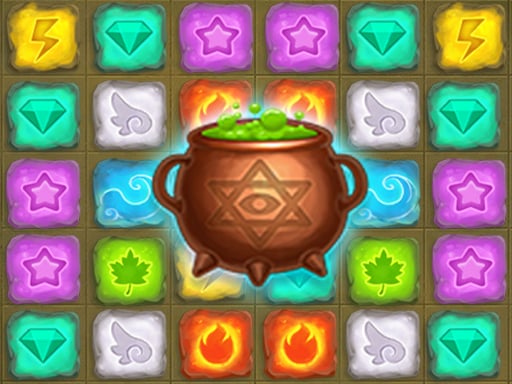
Jewel Duel gives each level a different board layout, which makes it good practice for moving specials towards each other.

Big Donuts Mania runs on score rather than levels. Lining up more than three donuts brings much higher points and matches formed after a drop earn extra points, so you see the value of playing low right on the scoreboard.

Bubble Match 3 has a plain board that makes two-move plans easy to see; bubbles that match by themselves after falling give a chain bonus.

Planets Match 3 tells you how many of which planet to collect in each level. Practice for staying on the goal colour.

Fruit Pop uses linking instead of swapping: you drag across matching fruit and let go. Here the length of the chain, not its shape, decides the bonus, so it asks for a different kind of thinking after classic match-3.

To see where match-3 sits among other matching styles, read the matching games guide. For colour matching with aim, see the bubble shooter tips; for grids where you complete lines, the block puzzle strategy post. The full list is in the matching games category.
FAQ
What does match-3 mean?
It is the name of the puzzle genre where you clear at least three identical pieces by lining them up across or down.
Does an L-shaped match give a bomb in every game?
No, games do not all use the same rule. In many of them a corner match produces a piece that blows up its surroundings, but some only reward straight fours and fives. Try it once in the early levels and see.
I cannot find a move. Is the board stuck?
Usually not; your eyes are only scanning rows. Read each column top to bottom. If there really is no move left, many games reshuffle the board for you.
Is Fruit Pop the same kind of game as match-3?
Related, but not the same. In match-3 you swap two pieces; in Fruit Pop you link pieces by dragging across them without moving them. In both, starting low makes falling pieces create new chances.