How to win fighting games: the spacing, defence and counter loop
You will not win fighting games by mashing buttons, because every attack leaves you open for a split second afterwards. What wins is a three-step loop: stand just outside your rival's reach, make their attack miss by stepping back or guarding, then hit them in the moment they are recovering. In physics-based wrestling games the secret is not a button at all, it is where you put your character's weight. Below you will find both explained with examples from the fighting and wrestling games on Oyun Köşesi.
The basics: health bar, rounds, special move
Most of the fighting games here share the same skeleton.
- Each player has a health or energy bar; empty your rival's bar and the round is yours.
- Matches are split into rounds. In Paper Fighter 3D a match is three rounds and the first to win two takes it.
- Punches are short and quick, kicks reach further but take longer to recover.
- Clean hits fill a power or bonus meter; once it is full, a special move unlocks.
- In two-player games the keyboard is split: one player uses the W A S D side, the other uses the arrow keys.
For the practical side of sharing a keyboard, see two players on one keyboard. This page is about what you do with those keys to take less damage and land more hits.
Spacing: wait at the edge of your range
Every attack has a reach. The spot where your rival's kick cannot touch you but you can close the gap in one step is the safest place in the fight. Waiting there forces the other player to commit first.
In Stick Fighter 3D a punch deals quick damage up close, while a kick has longer range and pushes the rival back. The game's own tip is to take one step forward before starting a punch string, because a punch thrown out of range leaves you exposed. Duel of Builders solves spacing with weapons: a fast weapon works up close, a ranged one works from afar, and walking in with the wrong one is the easiest way to get hit.
In Ultimate Robo Duel 3D you can fire projectiles from a distance. The game suggests keeping your distance with them and making the rival come to you rather than charging in.
Defence: make the hit whiff
Most games here have no dedicated block button; defence comes from movement. Stick Fighter 3D says it plainly: stepping back works like a block and is the best answer to a rival who keeps pushing forward. Paper Fighter 3D also recommends stepping back and hitting right after the rival's kick sails through the air.
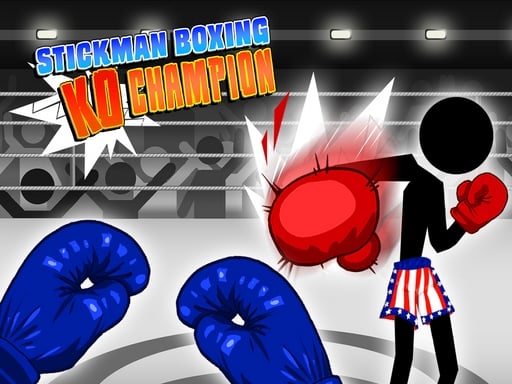
One game does give you a separate guard. In Stickman Boxing KO Champion on-screen buttons let you switch between punches and the guard. If you do not guard while your opponent swings, your stamina drains fast. Nonstop punching is risky too: when the rival counterattacks, you have no time left to cover up.
Know the exception: in Ultimate Robo Duel 3D the grab-and-throw on B or L cannot be blocked. Against a rival who is cornered and turtling, it is the surest answer.
Counters and combos: punish the opening
A counter is the hit you land right as your rival misses or finishes an attack. If you made a slow move like a kick whiff, that short window is your turn. Ultimate Robo Duel 3D advises using your special move not while the rival attacks, but in the opening after their attack misses.
A combo means linking hits one after another. Stickman Boxing KO Champion asks you to chain jabs, hooks and uppercuts, and its tip matters: repeat the same punch and your opponent starts blocking it. Paper Fighter 3D wants you to alternate punches and kicks to break the rival's rhythm. Do not spend the special the instant the meter fills; save it for when the rival is pinned in a corner and cannot escape.
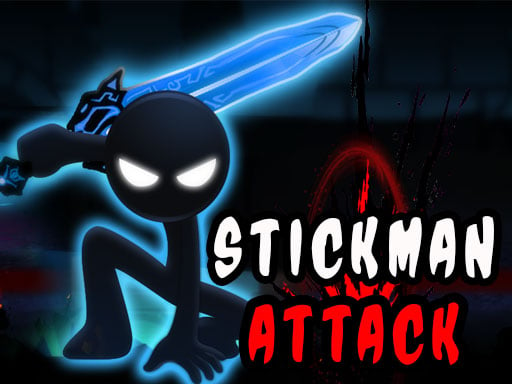
To practise timing on its own, Stickman Attack is a good drill. It plays with a single button; strike when an enemy steps into range and it flies back, knocking down the ones behind it, but strike too early and you whiff and stay open. That is the counter part of the loop in its purest form.
Wrestling: centre of gravity
In ragdoll wrestling games the characters flop around, and pressing buttons nonstop usually knocks you over too. What wins here is choosing when to lean forward and when to hold back. In Tug of Heads you have to keep your own weight back while pushing the rival towards the hazard; falling together loses the round. Jumping is not just an attack, it also loosens the rival's hold when they drag you.
In Get On Top Touch the two characters are locked arm in arm, and whoever's head touches the floor gives away a point. The game's tip: when the rival is in the air, pull your weight back and they lose balance on landing. Constant jumping is predictable, so pausing and letting the rival jump for nothing works well. It is the same loop again: wait, make them miss, answer.
Example: a rival who keeps rushing in
You are playing Stick Fighter 3D and your friend holds forward from the first second, throwing punches with F. Run at them and you eat two punches. Instead, stand where your kick can reach. As they close in, take one step back and the punch hits air. Right then, kick with K if you are the orange player, and the rival gets pushed back. Repeat that loop two or three times and your bonus meter starts to fill. When the rival goes down, do not fire the bonus straight away; the game suggests waiting for them to get up and hitting then.
Common mistakes
- Throwing attacks from outside your range and getting caught open.
- Using the same move over and over so the rival reads your rhythm.
- Spending the special the moment the meter fills, while the rival is comfortable.
- Swapping weapons or position in the middle of an exchange.
- Leaning in together with your rival in a wrestling game and going down as a pair.
- Pressing faster when you are losing; panic mashing costs more health than anything else.
Which games to practise with
Start by training your timing alone. Stickman Attack teaches counter timing with one button, and Stickman Boxing KO Champion teaches mixing up punches and guarding against four opponents. Both play by tapping on a phone.
Then try the spacing and counter loop on a keyboard. Stick Fighter 3D is the simplest start and also lets you play against the computer. Paper Fighter 3D adds meter management across three-round matches, Ultimate Robo Duel 3D adds distance control with projectiles and throws, and Duel of Builders adds weapon-swap timing. All four were built for a keyboard, so play them on a computer.
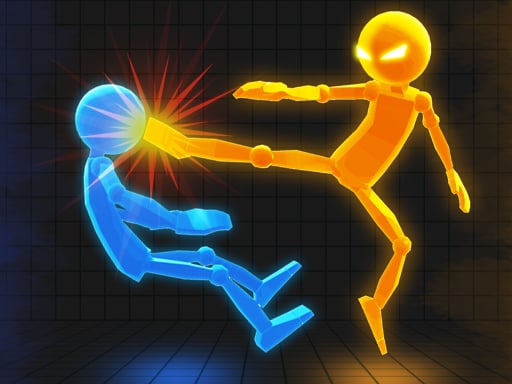 ▶Stick Fighter 3D - Free 2 Player Fighting Game
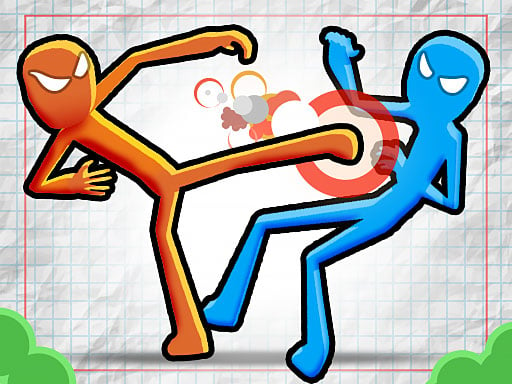 ▶Paper Fighter 3D - Free 2 Player Fighting Game
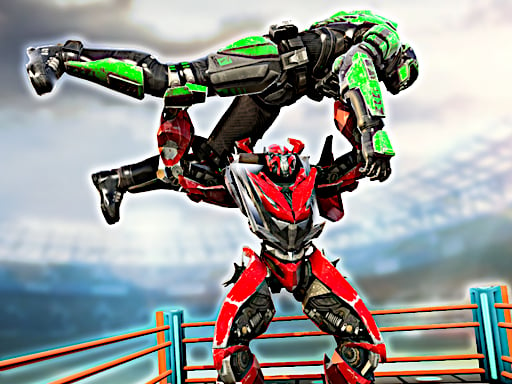 ▶Ultimate Robo Duel 3D - Free 2 Player Fighting Game
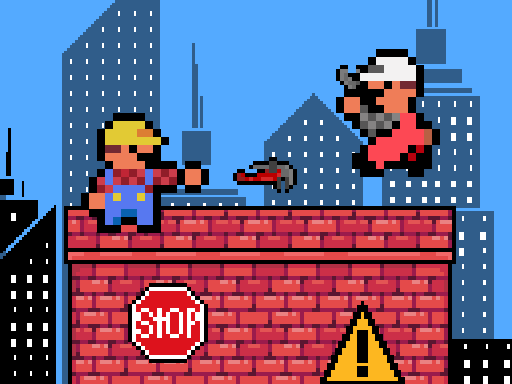 ▶Duel of Builders - Free 2 Player Fighting Game
Finally, two wrestling games for centre of gravity. Tug of Heads changes the arena layout across more than fifty levels, while Get On Top Touch gives you short, silly rounds. Both work on a phone with on-screen buttons. For a wider selection, see the 2 player games guide, the 2 player category and the stickman games page.
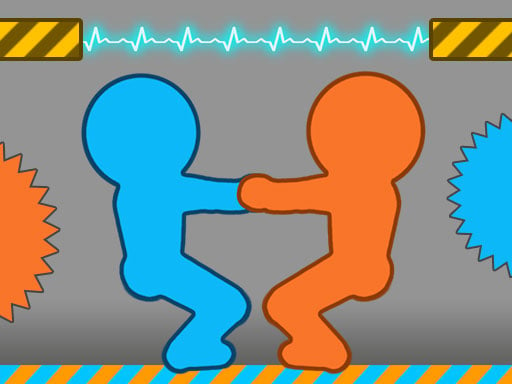
Frequently asked questions
How do you block in fighting games?
Most games here have no separate block button; you step back so the rival's attack misses. Some, like Stickman Boxing KO Champion, give you a separate guard option on screen.
Do I need to memorise button inputs for combos?
These games have no long input strings. A combo here means linking different hits and catching the moment the rival is open. Mixing punches and kicks instead of repeating one move is a solid start.
Can two people play a fighting game on one phone?
Tug of Heads and Get On Top Touch let two players share one screen, each using the buttons in their corner. Stick Fighter 3D, Paper Fighter 3D, Ultimate Robo Duel 3D and Duel of Builders need a keyboard; for more phone options, read 2 player games on one phone.