From cell to outer gate: the right tool, the guard's eyes and the clock
Every prison escape game asks one of three questions: which item beats this obstacle, where is the guard looking, and which route gets you out before the timer hits zero? You win by reading the scene, not by rushing it. Look at the obstacle before the items, watch the patrol before you move, map the route before you sprint. Getting caught rarely wipes your progress; it restarts the scene, so every capture hands you the answer for the next attempt.
Below, each of those three mechanics gets its own section. For the bigger picture of the genre, see the adventure games guide; this page sticks to the rules of the breakout itself.
The three core rules of a breakout
- Item choice: two or three items show up on screen, such as a spoon, a hammer, a rope or a key. The right one is the one that matches the obstacle in front of you. A wrong pick brings the guard and the scene replays.
- Line of sight: step into the area a guard or camera is watching and you are caught. Wall edges, the space behind furniture and dark corners are your safe zones.
- The clock: some escapes run on a countdown. You have to find the button that opens the door and reach that door before the timer runs out.
- The penalty: being spotted or falling usually sends you back to the start of the level or scene. The game does not end; you simply try again.
- The goal: get through the last door or over the outer wall. Each level is a small breakout, and together they form the full plan.
Picking the right item: read the obstacle, not the inventory
New players look at the items first and grab whatever looks strongest, but the answer is in the background. Bars on the window call for something that cuts, a locked door for a key or a pick, a guard in the way for the quiet option. Jail Breaker is built on exactly this: a few items appear in each scene, and tapping the right one moves the prisoner one step closer to freedom.
Noise is the second rule: a hammer is usually wrong when the guard is visible, so try the quiet option first. The third is order. Some items do nothing yet but unlock the next scene, so remember what you carry.
Prison Escape Online adds branching paths: dig a hole, grab an object or try a door, and not every option is safe. No reflexes needed; you have time to think. Usable items are drawn slightly differently from the scenery, so scan the screen slowly.
How to read a guard's line of sight
In a stealth escape you never fight the guard; you stay out of his view. Every guard and every camera runs a fixed loop: look one way, turn, pause, turn back. Your first job is to watch that loop once without moving at all. When the gap opens, go. When it does not, wait.
A concrete case: a guard mid-corridor looks left and right, and your target is the far door. Leave the moment he turns left and he faces right again before you are across. The right moment is when he has looked right and is just starting to turn left; that is the longest blind window. If the corridor is still too long, find a locker or alcove halfway and do it in two hops.
Sneak Out 3D is a clean drill for this skill: you drag the character along while cameras and watching characters sweep the room at set intervals. There is no timer; the whole point is waiting for the right moment. Prison Survive Break Escape moves the same idea into a full prison: you walk with WASD and run with Shift, but running draws attention, so you walk whenever a guard is close.
Learning the route when the clock is running
In timed escapes your first attempt is a scouting run: you find the door button and notice the gaps in the floor. On the second attempt you know where everything is, and the real race starts. If time runs out on your first go, count it as the run where you drew the map.
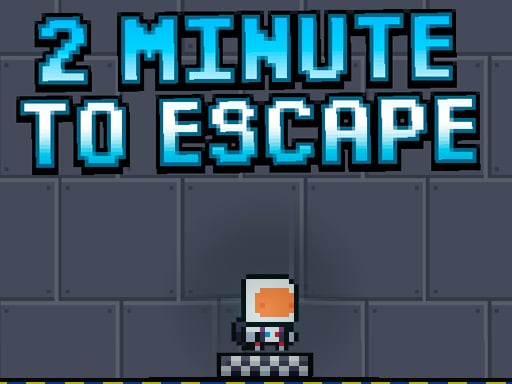
2 Minutes to Escape shows this clearly. Each room has a red button that opens the door while a two-minute timer ticks. The biggest time sink is reaching the door before the button and waiting there. Find the button first, then the exit. Pick your landing platform before you jump; steering in mid-air is hard. When time runs out the level restarts, but you keep your progress.
To memorise a route, turn it into a chant: right, button, back, double jump, door. If you always fail at one spot, cruise the easy part and save your focus for it.
Common mistakes
Rushing is the classic: running in a stealth level, tapping the first item you see, charging into a timed level blind. The second mistake is forgetting where you got caught. One extra second or one step back is often enough, so slow down at that spot next time.
The third mistake is picking the same wrong item again. A wrong choice only costs a replay, so work through the options in order and you will find the logic and remember it. The fourth is ignoring what is underneath you. In physics escapes like Stickman Prison Warriors, cutting the block right under the character can drop the piece on top of him.
Which games to practise on
The six games below each train a different side of the breakout. All are single-player, and all but one also work on a phone.
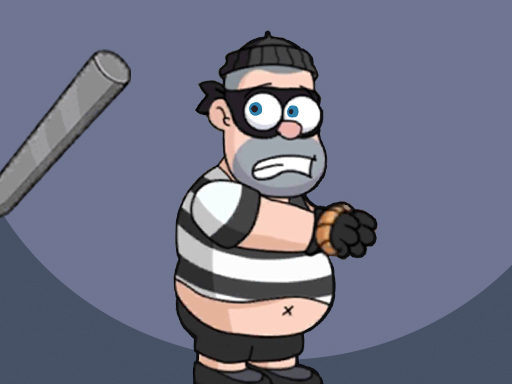
For item choice, Jail Breaker is the cleanest entry point. It moves forward through pictures with barely any text, and a wrong pick only restarts the scene. Left click or tap.
Prison Escape Online widens the decision tree. Every level has several routes, and your aim is to find the one that gets you out with the fewest mistakes. Click or tap to choose.
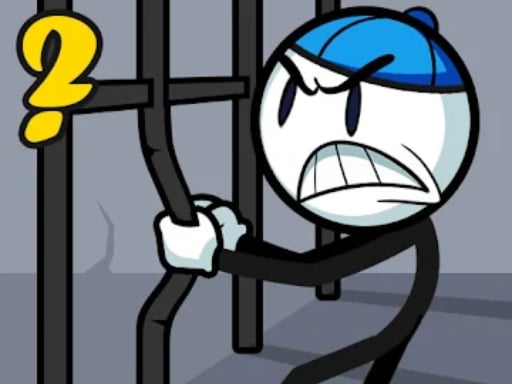
Stickman Prison Warriors turns the escape into a physics puzzle. You slice blocks with the mouse or your finger so they drop, then use them as steps to lift the character up. He walks by himself; your job is to build the floor.
Sneak Out 3D trains line-of-sight reading on its own. Move from cover to cover and never stop in the open. On a phone you steer by dragging your finger.
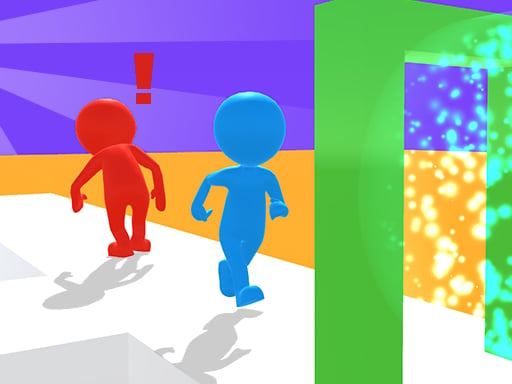
2 Minutes to Escape is the drill for memorising a timed route. You run and jump with the arrow keys or the on-screen buttons, and there are no scary visuals or sounds.
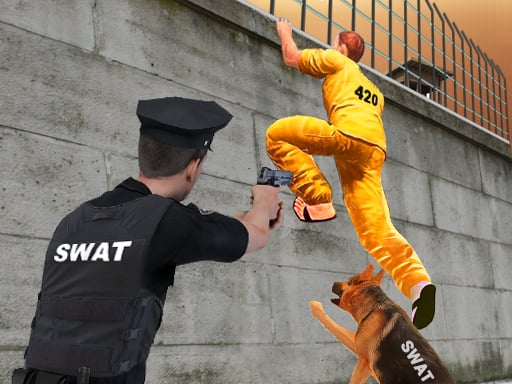
Prison Survive Break Escape combines all three. You sneak from your cell through corridors and the yard to the outer wall, using items you find to open locked passages. It needs a keyboard and mouse; get caught and you are back in your cell.
For more like these, browse the adventure category and the puzzle category. Other stick-figure games live on the stickman games page, and the wider map of thinking games is in the puzzle games guide.
Frequently asked questions
Does getting caught send me all the way back?
In none of these six games does the whole game end. When you are caught or the time runs out, that scene or level restarts and you try the same spot again.
Which escape games need no reflexes?
The item-choice and route-choice ones. Prison Escape Online runs entirely on choices and logic, and Jail Breaker asks you to look at a picture and decide. Sneak Out 3D has no time pressure either; you simply wait for the right moment.
Which ones work on a phone?
All except Prison Survive Break Escape use touch controls. The 3D prison needs WASD, Shift and a mouse, so you need a computer for that one.
Are escape games fine for younger kids?
You dodge guards here, but there is no fighting, and 2 Minutes to Escape has no scary visuals or sounds. Jail Breaker needs no reading. For the first tries, sit with them and show that getting caught just means another go.